

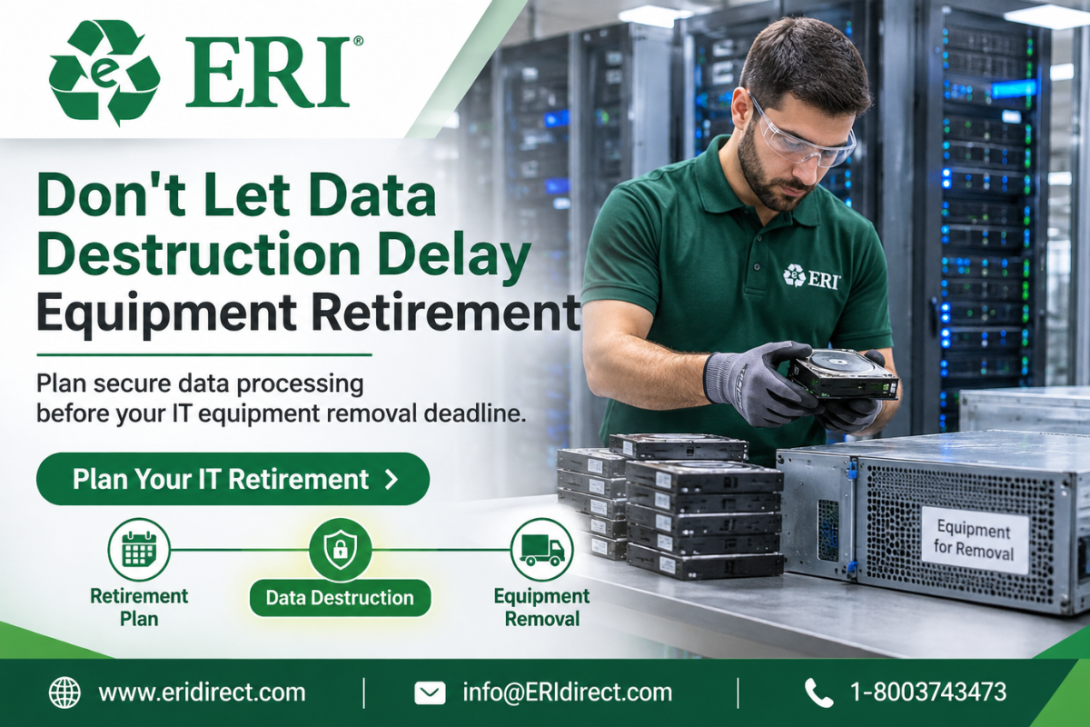
The equipment removal date could be set weeks prior to the start of the refresh process of technology, but it does not necessarily mean that all the retired equipment will be ready to collect on schedule. An important step is hardware data destruction, which is often ignored by companies when many storage devices have to be handled.
Let us consider a company retiring hundreds of computers together with some network devices and storage servers. It means that some equipment is ready to be removed, while some still hold information that needs to be preserved, migrated, sanitized, or destroyed safely. To treat all the devices as one single batch can lead to problems, as it is quite hard to gather all the equipment in one room.
At first, it is important to make an inventory of the equipment where it is necessary to distinguish between the devices holding data and other devices that do not contain any confidential information. Record asset ID numbers, device type, location, and whether the devices have been retired. This will provide common information for both IT and security teams, as to what needs to be processed before the devices are no longer under the company’s control.
The next step would be the setting up of realistic processing deadlines. This includes collecting all the necessary devices, reconciling the inventory, data migration, if required, sanitization and destruction of devices and the documentation for closing out the assets. Time should be provided for damaged drives and devices not able to be accessed and any discrepancies between the physical devices and the inventory.
It is just as important to plan and coordinate the responsibilities involved. IT teams are supposed to locate devices and make sure that the business data has been migrated from those devices when needed. The responsibility of defining how the data needs to be handled goes to security teams, while facility teams are responsible for coordination of access and removal.
The process of hardware data destruction must thus be considered as an activity that falls under the scheduled retirements rather than the administrative task to be done at the last minute. In advance coordination can prevent problems of storing the equipment until data destruction has been undertaken.
Additionally, companies may consider ERI's data destruction services when retiring equipment securely. The timing of the two processes can help in simplifying technology transition.