

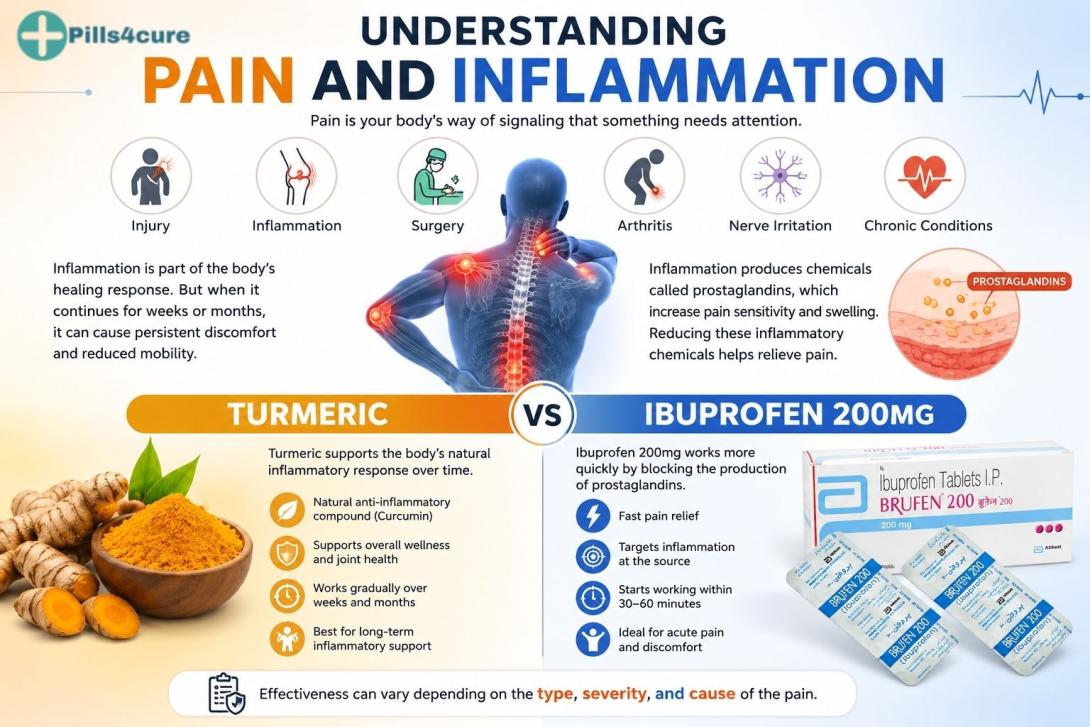
Pain can affect every part of daily life, from working and exercising to getting a good night's sleep. Whether the discomfort comes from arthritis, muscle strain, headaches, or minor injuries, many people look for fast and effective relief. Two popular options are turmeric and Brufen 200 mg Tablets, but they work in very different ways inside the body. While turmeric is a natural spice known for its anti-inflammatory properties, Ibuprofen 200mg tablet is a well-known nonsteroidal anti-inflammatory drug (NSAID) that provides faster pain relief for many conditions. Understanding how each option works can help you make an informed decision based on your health needs.
Understanding Pain and Inflammation
Pain is the body's natural warning system. When tissues become injured or irritated, the immune system releases chemicals called prostaglandins, cytokines, and other inflammatory mediators. These substances increase blood flow to the affected area, causing swelling, redness, warmth, and pain. While inflammation helps the body heal, excessive or long-lasting inflammation can become uncomfortable and interfere with daily activities. This is why treatments that reduce inflammation often help relieve pain as well.
What Is Turmeric?
Turmeric is a bright yellow spice obtained from the root of the Curcuma longa plant. It has been used for centuries in traditional medicine, particularly in India and Southeast Asia. The main active ingredient in turmeric is curcumin, a natural compound studied for its antioxidant and anti-inflammatory properties. Although turmeric is widely available as a spice and dietary supplement, the amount of curcumin absorbed into the bloodstream is naturally low unless it is combined with ingredients such as black pepper extract.
How Turmeric Works Inside the Body
Curcumin influences several pathways involved in inflammation rather than targeting a single enzyme. It may reduce the activity of inflammatory proteins such as NF-kB, decrease cytokine production, and help limit oxidative stress caused by free radicals. Because turmeric acts gradually, its effects usually develop over days or weeks rather than within hours. This makes turmeric more suitable for long-term support in some people rather than immediate pain relief after an injury.
What Is Ibuprofen?
Brufen 200mg that contains the key ingredient Ibuprofen belongs to the NSAID family of medicines. It has been used for decades to relieve mild to moderate pain, reduce inflammation, and lower fever. It is commonly recommended for headaches, muscle pain, menstrual cramps, dental pain, arthritis, sprains, and minor injuries. Because it has been extensively researched, healthcare professionals often recommend ibuprofen when fast symptom relief is needed.
How Ibuprofen Works Inside the Body
Once swallowed, Ibuprofen 200 mg is absorbed through the stomach and small intestine before entering the bloodstream. It works by blocking cyclooxygenase enzymes known as COX-1 and COX-2. These enzymes are responsible for producing prostaglandins, which contribute to pain, swelling, and inflammation. By lowering prostaglandin production, ibuprofen can reduce pain and inflammation within a relatively short period, often providing relief within 30 to 60 minutes.
Speed of Pain Relief
One of the biggest differences between turmeric and Brufen Ibuprofen 200mg is how quickly they work. Ibuprofen is designed to provide rapid symptom relief, making it a practical choice for acute pain such as sports injuries, headaches, toothaches, or fever. Turmeric, on the other hand, generally requires regular use before noticeable improvements appear. For people seeking immediate comfort, ibuprofen is usually more effective, while turmeric may be considered as part of a broader wellness routine after discussing it with a healthcare professional.
Comparing Their Anti-Inflammatory Effects
Turmeric supports the body's natural inflammatory response through multiple biological pathways, whereas Ibuprofen tablets 200mg directly blocks prostaglandin production. Because of this targeted action, ibuprofen generally provides stronger and more predictable relief for acute inflammation. Turmeric may offer supportive benefits in some individuals, but current research suggests that its effects are typically milder and more variable than standard NSAID therapy.
Which Works Better for Arthritis?
People living with osteoarthritis or other painful joint conditions often experience ongoing inflammation. Some studies suggest that curcumin supplements may help reduce discomfort in certain individuals. However, Brufen tablets 200mg is commonly used for short-term relief during painful flare-ups because it works faster and has a well-established evidence base. Long-term treatment decisions should always be guided by a healthcare provider, especially for chronic conditions.
Which Is Better for Muscle Pain?
After exercise, lifting heavy objects, or minor injuries, inflammation often contributes to muscle soreness. Ibuprofen tablets 200mg may reduce pain and swelling more rapidly, helping many people return to normal activities sooner. Turmeric may support recovery over time, but it is unlikely to match the immediate effectiveness of ibuprofen during the first few hours after an injury.
Safety Considerations
Although turmeric is considered safe as a food ingredient, concentrated supplements may interact with blood thinners and certain medications or cause stomach discomfort in some people. Ibuprofen Brufen 200mg should also be used carefully because frequent or prolonged use can increase the risk of stomach irritation, ulcers, kidney problems, or cardiovascular complications in susceptible individuals. Following dosing instructions and consulting a healthcare professional is important, particularly for people with existing medical conditions or those taking other medicines.
Can They Be Used Together?
Some people wonder whether turmeric and ibuprofen can be combined. Because turmeric supplements may have mild blood-thinning effects, combining them with NSAIDs could increase the risk of bleeding in some individuals. Anyone considering using both should seek advice from a qualified healthcare professional or pharmacist before doing so, especially if they have underlying health conditions or take prescription medications.
Which Option Is Best for Different Types of Pain?
The best choice depends on the situation. For sudden pain, headaches, sprains, dental discomfort, or fever, Brufen 200mg Tablet generally provides faster and more reliable relief. Turmeric may be a reasonable complementary option for people interested in dietary approaches to supporting overall health, but it should not be viewed as a replacement for appropriate medical treatment when prompt pain control is needed. Individual health history, other medications, and medical advice should always guide the decision.
Buy Brufen Tablet 200mg Quality Pain Relief Products
If you are looking for Brufen 200mg reliable pain relief options at Pills4Cure offers a selection of healthcare products designed to meet customer needs in the USA, UK, the Netherlands, and Australia. Customers in cities such as New York, Los Angeles, Chicago, London, Manchester, Birmingham, Amsterdam, Rotterdam, Sydney, Melbourne, and Brisbane can explore available products through the online store. Purchasing from a reputable pharmacy helps ensure product authenticity, secure ordering, and dependable customer support.
Final Thoughts on Brufen 200mg
Turmeric and ibuprofen tablet both aim to reduce pain, but they work inside the body in very different ways. Turmeric primarily supports the body's inflammatory response through multiple natural pathways and may be more suitable for long-term wellness when used appropriately. Ibuprofen tabs 200mg works by directly blocking prostaglandin production, providing faster and more consistent relief for acute pain and inflammation. Choosing between them depends on the type of pain, how quickly relief is needed, your overall health, and guidance from a healthcare professional. Understanding these differences allows you to make informed decisions that support safe and effective pain management.