

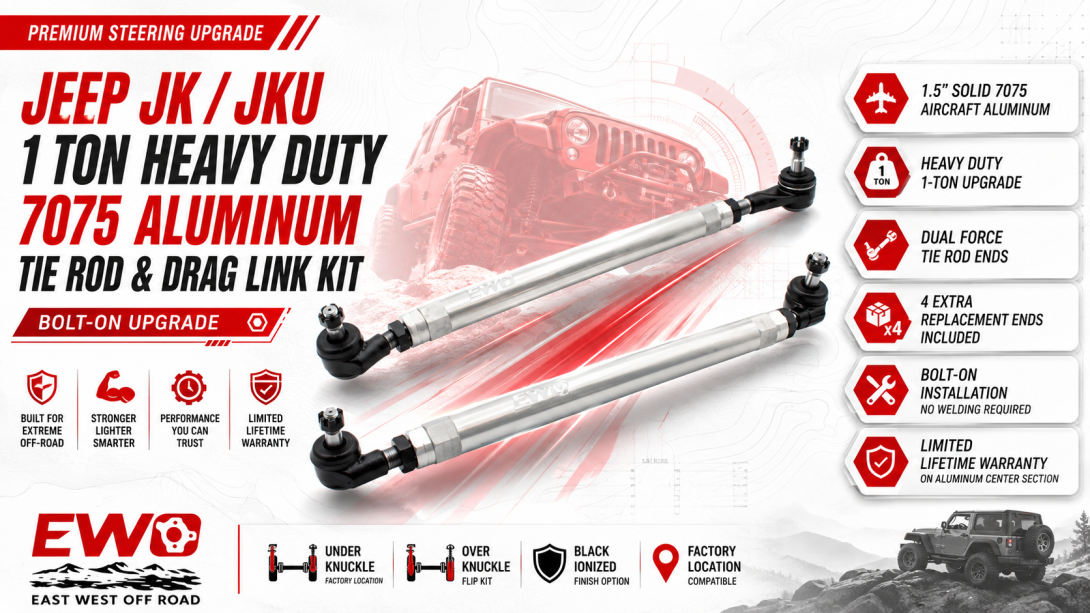
If your Jeep Wrangler has developed that dreaded highway wander or feels like it's steering through molasses, it's time to consider a Jeep JK steering upgrade. The factory steering components on the JK platform are notoriously undersized, especially once you add larger tires and lift kits. A wandering Jeep isn't just annoying—it's a safety hazard that robs you of driving confidence both on and off the pavement.
The Root Cause: Why Stock JK Steering Fails
The factory JK steering system was designed for stock tires and light off-roading. As soon as you bolt on 35-inch or larger tires, the stress on the system multiplies exponentially.
Flex and Deflection in Factory Components
The primary issue with stock JK steering isn't just one component—it's cumulative flex across the entire system. The factory tie rod is essentially a hollow tube that bends under stress, while the drag link and track bar joints wear and develop play over time. Together, they create a steering system that feels vague, wanders, and struggles to hold alignment.
Why Lift Kits Compound the Problem
When you lift a JK, you alter steering geometry in ways the factory parts can't handle. The track bar and drag link angles become mismatched, creating bump steer and unpredictable handling. This is why a heavy duty tie rod Jeep Wrangler needs to be paired with proper geometry correction to truly solve the problem.
The 1-Ton Steering Solution
A 1 ton steering kit JK represents the most comprehensive fix for the JK's steering shortcomings. These kits replace the weak factory linkage with components designed to handle serious off-road abuse.
What Makes a 1-Ton Kit Superior
Heavy-duty 1-ton steering kits use larger-diameter bars, stronger materials, and more robust rod ends than factory components. The best designs use 7075-T6 aluminum for the bars, which offers an exceptional strength-to-weight ratio and natural corrosion resistance. These kits are true bolt on steering kit JK solutions that install without cutting or welding.
The Benefits of 7075 Aluminum
For JK owners who prioritize both strength and weight savings, a Jeep JK aluminum steering kit is the sweet spot. 7075 aluminum, often called "aircraft grade," provides strength comparable to steel at roughly 30% less weight. This reduction in unsprung weight improves ride quality, suspension articulation, and overall vehicle dynamics. Many owners report that after installing an aircraft grade aluminum steering kit, their Jeep feels tighter and more responsive immediately.
Why You Need a JK Drag Link Upgrade
A JK drag link upgrade is just as crucial as upgrading the tie rod. The drag link transmits steering input from the pitman arm to the steering knuckle. Upgrading it eliminates flex and improves steering precision. When paired with a Jeep Wrangler JKU steering kit, you get a complete front-end overhaul that transforms how your Jeep drives.
The Role of 1-Ton Tie Rod Ends
The rod ends are the unsung heroes of any steering system. 1 ton tie rod ends are significantly larger and more durable than factory units. They are greaseable, allowing for regular maintenance that extends their lifespan. The "single plane" design used in top-tier kits eliminates the dreaded "tie rod flop" that plagues lesser setups, ensuring only necessary movement occurs.
Addressing Lift-Induced Geometry Issues
A steering upgrade is only half the battle. If your Jeep is lifted, you need to address the geometry changes that come with it.
The High Steer Solution
For Jeeps with 3 inches or more of lift, a high steer conversion is often necessary. This involves relocating the drag link to the top of the steering knuckle, which flattens the steering angles and corrects bump steer. A JK crossover steering kit with high steer capabilities is the gold standard for lifted JKs. Properly executed, a Jeep JK flip kit makes the steering feel close to stock, even with a tall lift.
Caster and Track Bar Considerations
A high steer flip requires a track bar relocation bracket to keep the track bar and drag link parallel. This maintains proper roll center and prevents body roll. Some comprehensive kits, like the JKS Steering & Caster Correction Geometry Upgrade Kit, combine a drag link flip with caster correction brackets to address multiple issues at once.
Real-World Performance Gains
The difference between stock and upgraded steering isn't subtle—it's transformative. Owners consistently report their Jeeps drive better than new after installing a quality off road steering upgrade.
Highway Stability
The most noticeable improvement is highway stability. The "wandering" that makes long trips exhausting disappears, replaced by a planted, confidence-inspiring feel. The Jeep tracks straight and doesn't require constant steering corrections to stay in its lane.
Trail Capability
Off-road, the benefits are even more dramatic. A Jeep Wrangler heavy duty steering setup provides precise control on technical terrain. The bar won't bend under hard impacts, and the stronger rod ends resist wear from the constant articulation of off-road use.
Eliminating Death Wobble
While death wobble has many potential causes, steering flex is a significant contributor. An upgraded, heavy duty drag link Jeep system removes slop from the steering system, helping to eliminate or prevent the oscillation that defines death wobble. When combined with proper alignment and quality suspension components, it's the most effective cure.
How to Choose the Right Steering Kit
With so many options available, choosing the right kit can be confusing. Here's a breakdown to help you decide.
Aluminum vs. Steel: The Debate
The choice between steel and aluminum ultimately comes down to your priorities. Steel steering components are extremely rigid and durable, making them ideal for rock crawling and heavy abuse. However, they are heavy and can transmit more impact vibration to the driver.
Aluminum 7075 steering components offer a lighter alternative that still provides exceptional strength. They are less likely to permanently bend, as they can flex and return to shape under impact. For most JK owners who want improved performance without adding significant weight, aluminum is the superior choice.
Bolt-On vs. Weld-On Kits
The best bolt on steering kit JK options require no cutting, drilling, or welding. This means you can install them at home with basic hand tools. Weld-on kits may offer additional strength, but they require specialized skills and equipment.
Maintenance Considerations
Look for a kit with greaseable rod ends. Regular greasing will prolong the life of the components and maintain smooth steering action. Some owners have noted that threads on heavy-duty kits can benefit from thread locker to prevent loosening under extreme vibration.
Installation and Setup Tips
Installing a heavy-duty steering kit is a straightforward process, but there are some key things to keep in mind.
Tools and Preparation
You'll need standard hand tools, a torque wrench, and penetrating oil. Many owners recommend having an alignment tool on hand to ensure proper toe settings after installation. Pre-adjust the tie rod ends before installing to get the length close to factory specs.
The Importance of Alignment
After any steering component upgrade, a professional alignment is non-negotiable. Proper toe and caster settings are essential to get the most out of your new components and prevent uneven tire wear.
Caster and Toe: Getting It Right
For lifted JKs, dialing in correct caster is crucial. Insufficient caster causes wandering, while excessive caster can create heavy steering. A good alignment shop with Jeep experience can set your caster to the sweet spot, often between 4 and 6 degrees positive.
Frequently Asked Questions (FAQs)
1. Is a Jeep JK steering upgrade really necessary?
If you run tires larger than 33 inches or frequently off-road, yes. The stock steering components are a weak point that can fail or bend, leading to dangerous driving conditions.
2. What's the difference between a tie rod and a drag link?
The tie rod connects the two front wheels and maintains toe alignment. The drag link connects the steering box (pitman arm) to the passenger-side steering knuckle, transmitting steering input from the driver.
3. Is 7075 aluminum stronger than steel for steering?
7075 aluminum has an excellent strength-to-weight ratio, comparable to mild steel. It is lighter and less prone to permanent bending, while steel offers higher overall rigidity. Both are valid choices.
4. What is a high steer or flip kit?
A high steer or flip kit relocates the drag link to the top of the steering knuckle. This flattens the steering angles on lifted Jeeps, reducing bump steer and improving handling.
5. How long does installation take?
Most owners report installation taking an afternoon. The process is straightforward and requires basic hand tools.
6. Do I need wheel spacers with a heavy-duty steering kit?
Often, yes. The larger 1-ton components may rub on factory wheels. Wheels with 4.75 inches or less of backspacing are typically required, or you'll need to install wheel spacers.
7. Can I install this kit myself, or do I need a professional?
Installation is manageable for a home mechanic with basic tools, but a professional alignment after installation is essential for proper handling and tire wear.
8. How often should I grease the tie rod ends?
Greasing every oil change or after every off-road trip is recommended. Regular greasing will ensure the rod ends last as long as possible.