

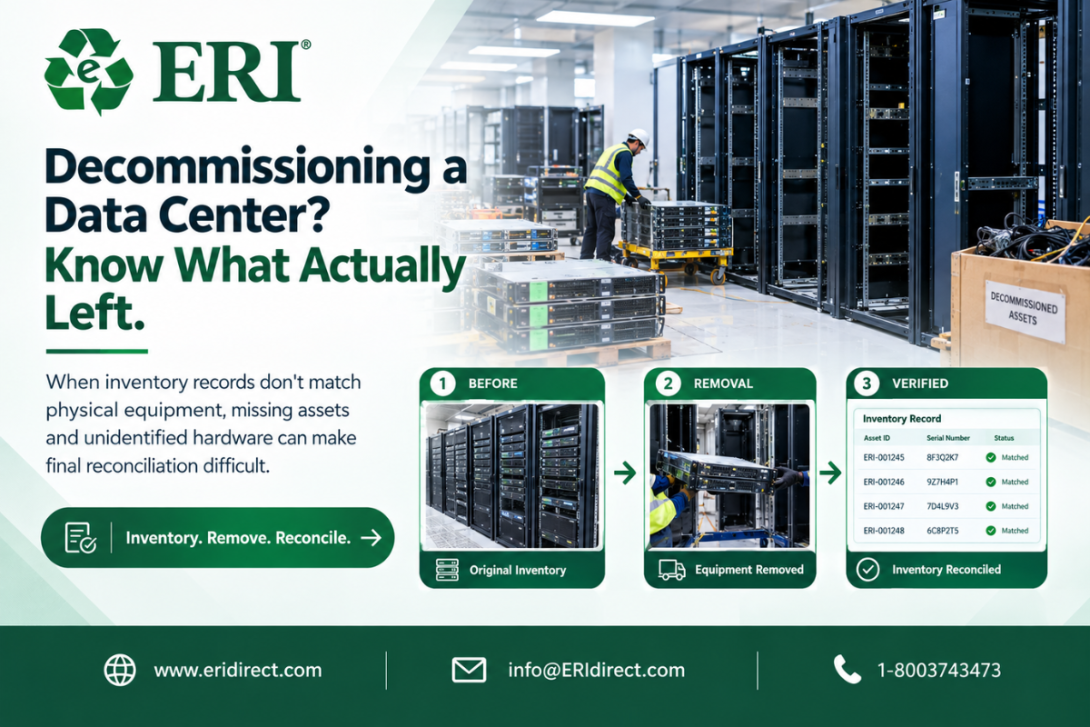
It may be hard to notice the issues related to inventory while a data center continues its operations since the errors may simply be covered by the daily maintenance routines. However, things change once all the data center is being evacuated and the company needs to take into account a lot of equipment in the shortest period of time possible. During decommissioning a data center, there may be several issues.
The serial number of a server may differ from the one in the asset database. Equipment may be located in another place than indicated in the rack positions. An item of equipment may lack any kind of documentation. The item in the inventory list may not be found within the facility. There may also be some cases when the equipment had been removed previously and there is no such documentation on it.
These are the reasons why it is necessary to know about the equipment that was there and what happened to it during the process of decommissioning.
Prior to decommissioning, physical inventory verification could assist in identifying such discrepancies. Equipment could be cross-referenced against available asset records, and exceptions could be noted for further investigations. It would be especially beneficial for storage devices, as accurate identification would enable linking of a device to the right destruction or disposition process.
Once dismantling begins, inventory control needs to continue. Equipment must be recorded for as it is being moved out from a physical location, instead of at the end of the process when all is said and done. Final inventory may show that something is missing, but it may not show how and when.
Reconciliation stage then comes into play. The organization could compare the assets that were supposed to leave against those that left. Such records could then be compared against the equipment received and disposition records.
This system makes it easier to track accountability. Any time there’s a mismatch of the serial number, there’s something to investigate. If there’s no equipment, then there’s a clear exception rather than an unknown hole somewhere within the entire project.
The idea is not to rely on the assumption that all of the inventory records will be accurate. Rather, the idea is to catch inaccuracies in time to fix them before the equipment and related people become inaccessible.
For companies decommissioning a data center, this difference might be very important. Once the center is cleared out and the equipment has been through several places, it will be much harder to reconstruct the initial inventory.