
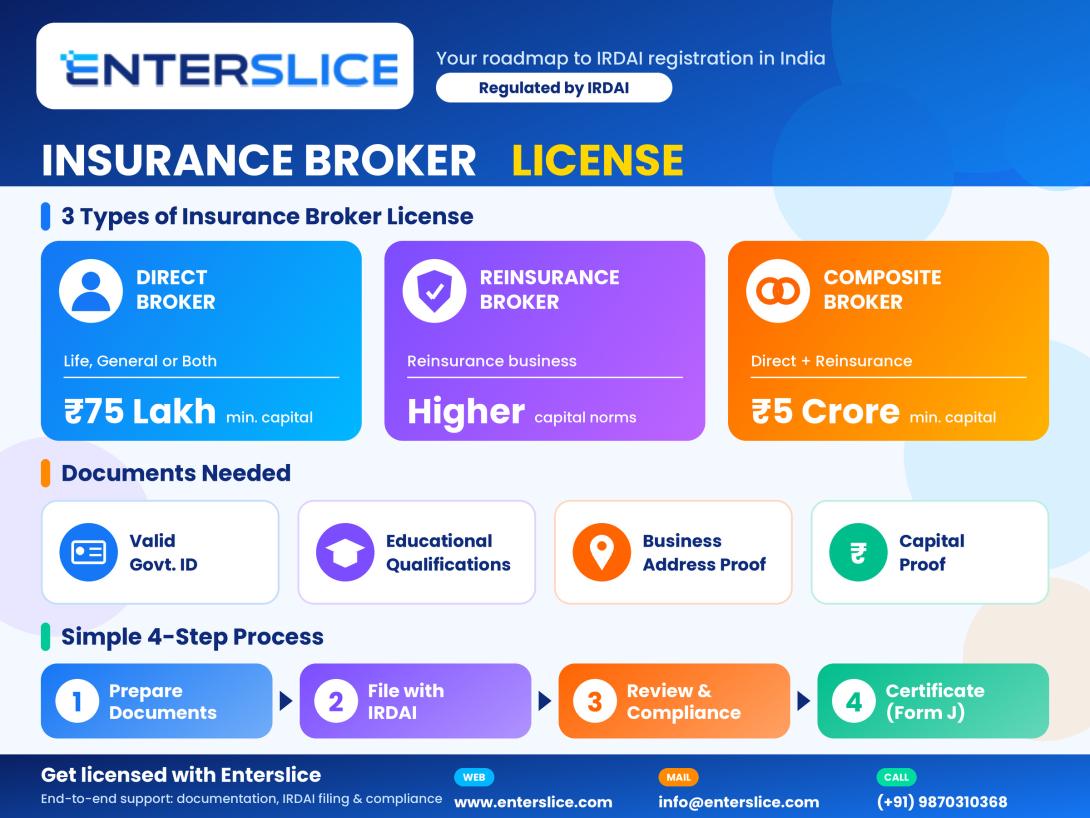
Obtaining an insurance broker license in India is an important step for businesses planning to enter the insurance distribution industry. An authorised insurance broker can help clients compare insurance products, assess risks, arrange suitable coverage and support them during policy servicing and claims-related matters.
The Insurance Regulatory and Development Authority of India (IRDAI) regulates insurance brokers and prescribes the requirements for registration, capital, qualified personnel and business conduct. Businesses must meet the applicable conditions before offering insurance broking services.
This guide explains the insurance broker registration process, eligibility criteria, documents, fees, benefits and the difference between an insurance broker and an insurance agent.
What Is an Insurance Broker License?
An insurance broker license is a regulatory authorisation that permits an eligible entity to conduct insurance broking activities in accordance with IRDAI regulations. Unlike an insurance agent who operates under an insurer's appointment, an insurance broker generally works on behalf of clients to identify and arrange suitable insurance coverage from eligible insurers.
Insurance brokers may assist with policy comparisons, risk assessment, insurance placement, claims consultancy and policy servicing, depending on their registration category and permitted activities.
Businesses planning to become insurance brokers must obtain the required registration before commencing regulated broking activities.
Types of Insurance Brokers in India
IRDAI recognises different categories of insurance brokers based on the nature of their services.
1. Direct Broker
A direct broker helps individuals and businesses obtain suitable life or general insurance coverage from insurers in India. Depending on the approved category, the broker may work in life insurance, general insurance or both.
2. Reinsurance Broker
A reinsurance broker facilitates reinsurance arrangements between insurers and reinsurers. These professionals support risk placement, negotiations and other permitted reinsurance-related services.
3. Composite Broker
A composite broker can undertake permitted direct insurance and reinsurance broking activities, subject to the applicable regulatory requirements.
Eligibility Criteria for Insurance Broker Registration
Applicants must satisfy IRDAI's eligibility and financial conditions before applying for an insurance broker license.
The principal requirements include:
- Establishing an eligible legal entity, such as a company or an eligible limited liability partnership.
- Maintaining the prescribed minimum capital and net worth.
- Ensuring that promoters and key management personnel satisfy applicable fit-and-proper requirements.
- Appointing a qualified Principal Officer and the required Broker Qualified Persons.
- Maintaining adequate office infrastructure, technology, records and trained personnel.
- Demonstrating financial soundness and the ability to conduct insurance broking activities.
- Complying with the applicable ownership, governance and regulatory conditions.
The entity's proposed name and constitutional documents should also comply with the requirements applicable to insurance brokers.
Minimum Capital and Net Worth Requirements
The capital requirements under the Insurance Brokers Regulations, 2018, include the following minimum amounts:
Broker category
Minimum capital
Direct broker
₹75 lakh
Reinsurance broker
₹4 crore
Composite broker
₹5 crore
The prescribed minimum net worth is generally ₹50 lakh for a direct broker, 50% of the applicable minimum capital for a reinsurance broker, and 50% of the applicable minimum capital for a composite broker.
Direct brokers must also maintain the prescribed ₹10 lakh deposit with a scheduled bank. Reinsurance and composite brokers must maintain the applicable deposit calculated under the regulations.
These financial requirements should be verified against the latest applicable IRDAI provisions before an application is prepared.
Documents Required for Insurance Broker Registration
Applicants should prepare a complete set of corporate, financial and management documents. The exact list depends on the applicant's structure and registration category.
Common documents include:
- Certificate of Incorporation or applicable entity registration documents.
- Memorandum and Articles of Association, or LLP agreement, as applicable.
- PAN and registered office details.
- Details of promoters, directors, partners and key management personnel.
- Fit-and-proper declarations and prescribed undertakings.
- Details and credentials of the Principal Officer and Broker Qualified Persons.
- Business plan describing proposed operations and insurance broking activities.
- Audited financial statements and financial information required by IRDAI.
- Capital and net-worth certificates issued by a qualified professional.
- Details of the proposed office, technology infrastructure and staffing.
- Board resolutions or authorisations approving the application.
- Prescribed application forms and supporting declarations.
IRDAI may request additional information or clarification during its review. Applicants should ensure that all financial statements, declarations and supporting records are consistent.
Step-by-Step Process to Obtain an Insurance Broker License
Step 1: Select the Registration Category
Determine whether the business requires registration as a direct broker, reinsurance broker or composite broker. The proposed category should match the services the business intends to provide.
Step 2: Establish the Eligible Entity
Set up the appropriate legal entity and ensure that its constitutional documents, ownership structure and proposed business activities meet the applicable requirements.
Step 3: Meet Financial and Personnel Requirements
Arrange the prescribed capital, net worth and bank deposit. Identify qualified personnel and ensure that the Principal Officer and Broker Qualified Persons meet the applicable qualification, training and examination requirements.
Step 4: Prepare and Submit the Application
Submit the prescribed application, supporting documents and applicable processing fee through the process specified by IRDAI.
Step 5: Respond to Regulatory Queries
IRDAI may examine the applicant's financial position, management, infrastructure, business plan and eligibility. The applicant should provide any additional documents or clarifications requested by the regulator.
Step 6: Obtain Approval and Complete Formalities
Where the applicable procedure requires it, IRDAI may issue in-principle approval subject to specified conditions. The applicant must fulfil those conditions, pay the applicable registration-related fees and complete the remaining formalities before commencing regulated broking activities.
Insurance Broker License Fees in India
The cost of obtaining an insurance broker license includes regulatory fees and the expenses involved in establishing and operating the business.
Under the 2018 fee schedule, the application processing fees were ₹25,000 for direct brokers, ₹50,000 for reinsurance brokers and ₹75,000 for composite brokers. However, IRDAI introduced amendments to the insurance intermediary framework in July 2026, including changes to the registration and annual-fee structure.
Applicants should therefore verify the latest applicable fee schedule before filing. In addition to regulatory fees, businesses should budget for capital requirements, office infrastructure, personnel, professional assistance, technology and applicable insurance coverage.
Benefits of Insurance Broker Registration
An insurance broker license offers several business advantages:
- Access to multiple insurers: Brokers can help clients compare eligible insurance products and coverage options.
- Greater client confidence: Regulatory registration supports credibility and demonstrates compliance with applicable requirements.
- Professional risk advisory: Brokers can help businesses evaluate insurance needs and identify potential coverage gaps.
- Claims and servicing assistance: Brokers may assist clients with permitted claims consultancy and policy servicing activities.
- Business growth opportunities: Registration enables an eligible entity to develop insurance distribution and advisory services within its approved scope.
Insurance Agent Licence vs Insurance Broker License
An insurance agent licence and an insurance broker license are not interchangeable.
An insurance agent generally represents an insurer or operates under an authorised distribution arrangement. An insurance broker, by contrast, is registered under the applicable broker framework and generally assists clients in arranging coverage from insurers.
The eligibility requirements, authorisation process, financial requirements and permitted activities differ between these roles. Businesses should identify the correct regulatory route before starting operations.
Compliance Obligations After Registration
Obtaining registration is only the first step. Insurance brokers must maintain their financial position, qualified personnel, appropriate records and regulatory reporting processes.
They must follow the applicable code of conduct, protect client information, address grievances, maintain required professional indemnity insurance and comply with IRDAI directions. Brokers should also monitor the latest annual-fee, reporting and registration requirements, as regulatory obligations can change.
How Enterslice Can Help
Enterslice assists businesses with regulatory advisory, application preparation, documentation review and compliance support for insurance-related registrations. Professional guidance can help applicants identify the relevant registration category, organise financial and corporate records, prepare the application and respond to regulatory queries.
Businesses planning to enter the insurance broking industry should evaluate their proposed activities, capital availability and compliance capabilities before initiating the process.
Conclusion
An insurance broker license enables an eligible business to provide regulated insurance broking services in India. Applicants must select the appropriate category, meet the financial and personnel requirements, submit the prescribed documents and obtain IRDAI registration before commencing operations.
Since regulatory requirements and fee structures may change, applicants should verify the latest IRDAI rules before filing. Careful preparation can help reduce documentation gaps and support a smoother registration process.
Most popular services :
NBFC account aggregator license
Frequently Asked Questions
1. Who grants an insurance broker license in India?
The Insurance Regulatory and Development Authority of India (IRDAI) regulates insurance brokers and grants registration under the applicable regulatory framework.
2. What is the minimum capital required for an insurance broker license?
The prescribed minimum capital is ₹75 lakh for a direct broker, ₹4 crore for a reinsurance broker and ₹5 crore for a composite broker, subject to the latest applicable regulations.
3. Can an individual apply for an insurance broker license?
Insurance broker registration generally requires an eligible legal entity. An individual wishing to sell insurance may need to consider the separate insurance agent authorisation route, depending on the intended role.
4. What is the difference between an insurance agent and an insurance broker?
An insurance agent generally represents an insurer, while an insurance broker is registered to arrange insurance for clients under the applicable broker framework. Their permitted activities and registration requirements differ.
5. What documents are required for insurance broker registration?
Common documents include incorporation records, constitutional documents, financial statements, capital and net-worth certificates, business plans, management details, personnel credentials and prescribed declarations.
6. How much does an insurance broker license cost?
The total cost depends on the broker category, regulatory fees, capital requirements and operating expenses. The latest IRDAI fee schedule should be checked because the registration framework changed in 2026.
7. Can an insurance broker work with multiple insurance companies?
Yes. Within the scope of its registration and applicable regulatory requirements, an insurance broker can arrange suitable coverage through multiple insurers.
8. Does an insurance broker need to comply with IRDAI regulations after registration?
Yes. Brokers must maintain applicable financial and personnel requirements, follow the prescribed code of conduct, maintain records, address grievances and meet ongoing regulatory and fee obligations.