

Introduction to Modern Classroom Technology
Modern classrooms continue evolving with advanced educational technology. Schools, colleges, and training centers now focus heavily on interactive learning experiences. Among the most effective classroom tools, high-quality document cameras stand out for their ability to improve communication, visual learning, and student participation.
We understand the growing demand for engaging educational environments. Therefore, educators increasingly rely on document cameras to create interactive lessons, improve lesson delivery, and simplify classroom demonstrations. These innovative devices help teachers present materials clearly while maintaining student focus throughout the session.
A document camera transforms traditional teaching into a dynamic and visually engaging experience. Whether displaying textbooks, science experiments, handwritten notes, or 3D objects, document cameras help students understand concepts more effectively.
What Is a Document Camera?
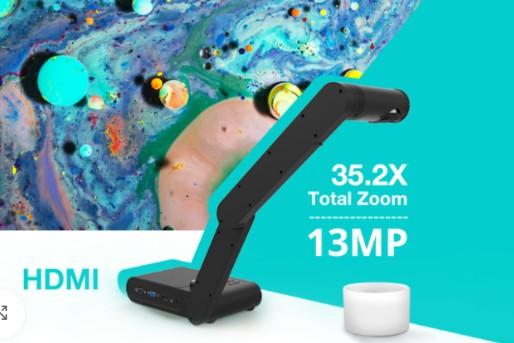
A document camera is a visual presentation device that captures and displays documents, objects, and images in real time. It connects directly to projectors, interactive flat panels, monitors, or computers for large-screen viewing.
Unlike traditional overhead projectors, modern document cameras deliver high-definition image quality, zoom functionality, and advanced connectivity options. These features make classroom presentations more professional and interactive.
Document cameras support various educational activities, including:
- Live demonstrations
- Reading sessions
- Science experiments
- Art presentations
- Remote learning
- Interactive teaching
As digital learning expands, document cameras continue becoming essential tools in modern education systems.
Why Classroom Engagement Matters
Student engagement directly impacts learning outcomes and classroom participation. Traditional teaching methods often struggle to maintain student attention for extended periods. However, visual and interactive learning tools significantly improve concentration and understanding.
High-quality document cameras help teachers create engaging lessons that encourage active participation. Students remain more attentive when they can clearly view live demonstrations, written explanations, and visual materials.
Interactive learning environments also improve:
- Knowledge retention
- Student collaboration
- Classroom communication
- Creative thinking
- Academic performance
Therefore, investing in classroom engagement technology supports both educators and students.
Key Features of High-Quality Document Cameras
1. High-Definition Image Quality
Image clarity plays a major role in effective teaching. Modern document cameras provide HD and Full HD resolution for sharp and detailed visuals.
Teachers can display:
- Textbooks
- Worksheets
- Maps
- Diagrams
- Microscopic objects
- Artwork
Clear visuals help students understand lessons faster while reducing visual strain.
2. Optical and Digital Zoom Functions
Zoom functionality allows educators to focus on specific details during presentations. Teachers can enlarge text, diagrams, or small objects without losing image quality.
This feature proves highly useful during:
- Science demonstrations
- Math problem explanations
- Technical training
- Art analysis
Students can observe fine details clearly from any seating position.
3. Real-Time Video Streaming
Modern document cameras support smooth real-time video display. This capability improves live demonstrations and classroom interaction.
Teachers can instantly showcase:
- Hands-on activities
- Experiments
- Object movement
- Live annotations
As a result, students stay engaged throughout the lesson.
4. Flexible Camera Arm Design
Most advanced document cameras feature adjustable arms and rotating camera heads. This flexible design allows teachers to capture materials from multiple angles.
Educators can easily switch between:
- Flat documents
- 3D objects
- Classroom demonstrations
- Group activities
This flexibility improves lesson delivery and visual presentation quality.
5. Easy Connectivity Options
Modern document cameras support multiple connectivity options, including:
- HDMI
- USB
- VGA
- Wireless connectivity
These options ensure compatibility with projectors, displays, laptops, and interactive whiteboards.
Easy connectivity simplifies classroom setup while reducing technical interruptions.
Benefits of Using Document Cameras in Classrooms
Enhanced Student Attention
Visual presentations naturally capture student interest. Document cameras make lessons more interactive and visually appealing.
Students remain focused when they can clearly see:
- Live writing
- Problem-solving methods
- Physical objects
- Real-time demonstrations
This improved attention leads to better classroom participation.
Improved Understanding of Complex Topics
Many subjects require detailed explanations and visual support. Document cameras solutions help simplify difficult concepts through magnified visuals and live demonstrations.
Teachers can explain:
- Mathematical equations
- Scientific processes
- Historical documents
- Engineering diagrams
Visual learning improves concept clarity and student comprehension.
Supports Interactive Teaching Methods
Interactive teaching encourages students to participate actively in lessons. Document cameras help teachers involve students through collaborative activities and live discussions.
Teachers can:
- Display student work instantly
- Conduct classroom quizzes
- Review assignments together
- Analyze projects in real time
These activities create more engaging classroom environments.
Ideal for Hybrid and Remote Learning
Remote education continues growing worldwide. Document cameras support online learning by allowing teachers to share live content during virtual classes.
Educators can present:
- Handwritten notes
- Worksheets
- Demonstrations
- Lab experiments
This capability improves communication between teachers and remote students.
Encourages Creative Learning
Document cameras support creativity across multiple subjects. Teachers can display artwork, models, craft projects, and creative assignments clearly for classroom discussions.
Creative learning activities become more engaging and interactive with real-time visual sharing.
Applications of Document Cameras Across Different Subjects
Science Education
Science teachers use document cameras to display:
- Chemical reactions
- Biological samples
- Lab experiments
- Small scientific objects
Students gain better visibility during practical demonstrations.
Mathematics Instruction
Math teachers can solve equations live while students follow each step clearly. Zoom features help display graphs, formulas, and calculations effectively.
This improves student understanding and reduces confusion.
Language and Reading Classes
Document cameras assist language teachers during:
- Story reading
- Grammar lessons
- Handwriting practice
- Vocabulary explanations
Students can follow text clearly during classroom activities.
Art and Design Education
Art instructors can demonstrate:
- Sketching techniques
- Painting methods
- Design concepts
- Craft projects
Students observe detailed creative processes in real time.
Important Factors to Consider Before Buying a Document Camera
Image Resolution
High-resolution cameras provide clearer visuals and improve presentation quality. Full HD models offer excellent classroom performance.
Zoom Capability
Strong optical zoom helps display small details without image distortion.
Frame Rate Performance
Smooth video playback improves live demonstrations and motion clarity.
Portability and Design
Compact and lightweight models provide easier classroom mobility and storage.
Compatibility
Ensure the document camera supports your classroom devices and presentation systems.
Future of Document Cameras in Education
Educational technology continues advancing rapidly. Document cameras now integrate with:
- Interactive displays
- Learning management systems
- Video conferencing platforms
- Digital whiteboards
Future models will likely include artificial intelligence, cloud integration, and enhanced wireless collaboration features.
As classrooms become increasingly digital, document cameras will continue supporting interactive and student-centered learning environments.
Why Schools Should Invest in High-Quality Document Cameras
Educational institutions benefit significantly from investing in advanced classroom technology. High-quality document cameras improve lesson delivery, classroom interaction, and student understanding.
Schools can:
- Improve teaching efficiency
- Enhance digital learning experiences
- Support collaborative learning
- Simplify lesson presentations
- Increase student participation
These benefits make document cameras valuable tools for modern education systems.
Conclusion
High-quality document cameras have transformed classroom teaching and student engagement. Their ability to display clear visuals, support live demonstrations, and encourage interactive learning makes them essential educational tools.
From science experiments to virtual learning sessions, document cameras improve communication, creativity, and classroom collaboration. They help educators deliver more effective lessons while keeping students actively involved throughout the learning process.
As educational technology continues evolving, document cameras remain one of the smartest investments for schools, colleges, and training centers seeking better learning experiences and improved classroom engagement.
Contact us today to explore advanced document camera solutions for modern classrooms and interactive learning environments.