

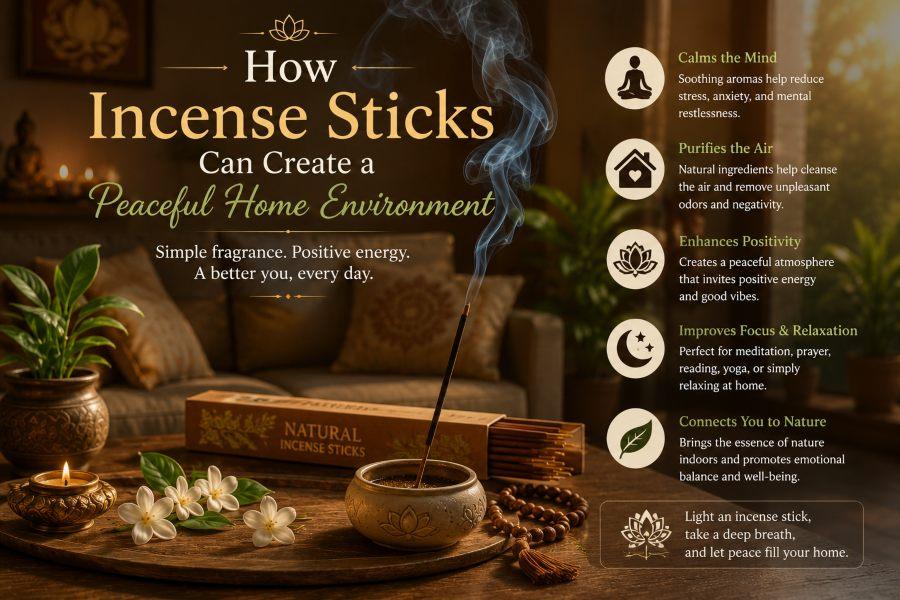
Incense Sticks
Walk into two homes. One smells like nothing in particular—maybe faint cooking odors, maybe just stale air. The other carries a soft, warm fragrance the second you step through the door, and without even noticing it, your shoulders drop half an inch. That reaction isn't imagination. It's your nervous system responding to the environment before your conscious mind even catches up. Incense sticks are one of the simplest, cheapest tools for engineering that second kind of home — the kind that feels settled rather than chaotic. If you've ever browsed Home Fragrance Incense wondering whether it's really worth the effort, the answer lies less in the scent itself and more in what consistent fragrance does to how a space feels over time.
This isn't about masking bad smells. It's about actively shaping the emotional tone of the rooms you spend your life in.
Why Homes Without Scent Feel Emotionally Flat
Here's something interesting: humans associate memory and emotion with smell more strongly than with sight or sound. That's why a specific scent can instantly transport you back to childhood, while a photo from the same era might not trigger nearly as strong a reaction.
Most modern homes are scent-neutral by default. Central air conditioning, sealed windows, and synthetic cleaning products often strip a home of any distinctive smell at all. The result is a space that looks fine but feels curiously forgettable — nothing marks it as yours.
Introducing a consistent, intentional fragrance changes that. Over weeks and months, that scent becomes tied to the feeling of being home, the way a specific song becomes tied to a particular summer. It's a small thing with a surprisingly large psychological payoff.
The Room-by-Room Approach (Because One Scent Doesn't Fit Everywhere)
A common mistake is treating incense as a single, whole-house solution—light one stick somewhere central and hope it handles the entire home. It rarely works that well, since different rooms serve different emotional purposes.
Living room: Go for something warm and welcoming, since this is usually where guests and family gather. Sandalwood or a mild floral blend works well here, striking a balance between calming and pleasant without being overpowering for group settings.
Bedroom: This space needs restraint. Anything too sharp or stimulating (citrus, strong florals) can interfere with winding down. Lavender-adjacent or soft sandalwood scents tend to support rest rather than working against it.
Kitchen: Cooking smells are strong and persistent, so lighter, cleaner scents work better here—something like a mild lemongrass can cut through lingering food odors without clashing with what's actually being cooked.
Puja or meditation corner: This is where traditional dhoop—sandalwood, agarwood, or a dedicated devotional blend—belongs, kept separate from everyday household scents so the space retains its distinct, sacred feel.
Matching scent to room function isn't a luxury detail. It's the difference between a home that smells pleasant in patches and one that feels considered throughout.
The Psychology of a Consistently Fragrant Home
There's a subtle but real difference between a home that occasionally smells nice and one that consistently does. The second creates something psychologists sometimes call an "anchor environment"—a space your nervous system learns to associate with safety and predictability.
- Repetition builds association. The more consistently a scent appears in a specific room, the faster your brain links that smell to the feeling of being in that space.
- Predictability reduces low-level stress. Coming home to a familiar scent, day after day, reinforces a sense that your environment is stable and under control, even during objectively stressful weeks.
- Guests notice, even if they don't say anything. A subtly fragrant home reads as cared-for and intentional, without anyone needing to comment on it directly.
This is why people who maintain a consistent incense routine often report their home "feeling different" compared to visiting other places, even when nothing else about the decor has changed.
Timing Matters as Much as Scent Choice
When you light incense, throughout the day changes what it actually accomplishes.
- Morning: Light incense right after waking, before checking your phone. This sets a tone for the day rather than reacting to whatever notification came in overnight.
- Midday: A quick burn during a work break can serve as a mental reset, especially in home offices where the boundary between "work mode" and "home mode" tends to blur.
- Evening: This is where incense does its heaviest lifting—signaling to your body that the day's demands are winding down, especially if paired with dimmer lighting and quieter activity.
Burning incense at random, disconnected moments still smells nice, but it misses the deeper opportunity: using scent as a scheduling cue that trains your body to shift gears at predictable points in the day.
Clearing Clutter and Clearing Air Often Go Together
There's an interesting pattern worth mentioning here, even though it sounds unrelated at first. Homes that maintain intentional fragrance rituals often also tend to be tidier — not because incense magically inspires cleaning, but because both habits stem from the same underlying mindset: treating your space as something worth maintaining, not just occupying.
- Lighting incense in a cluttered room tends to highlight the mess rather than mask it, since a pleasant smell in a chaotic space feels oddly mismatched.
- Many people naturally tidy a small area — a shelf, a corner, a table — right before lighting incense there, almost as a way of "preparing" the space for the ritual.
- Over time, this small habit of preparing a space before scenting it can nudge broader tidiness without any conscious decision to "declutter more."
The incense itself isn't doing the cleaning. But the ritual around it often quietly reinforces better space-keeping habits as a side effect.
What to Avoid If You Want a Genuinely Peaceful Result
Not every use of incense supports calm. A few common missteps actually work against the goal.
- Overloading a single room with multiple lit sticks at once. More isn't better here—it usually just creates an overwhelming, headache-inducing cloud rather than a gentle atmosphere.
- Switching scents too frequently. Constant variety prevents the association-building effect discussed earlier. Pick a small rotation and stick with it for weeks, not days.
- Ignoring ventilation entirely in the name of "trapping the scent." Poor air circulation concentrates smoke particles, which can undermine the very sense of calm you're trying to create, especially for sensitive lungs.
- Using heavily synthetic, cheap sticks purely for cost savings. These often smell sharp and artificial rather than genuinely soothing, working against the atmosphere you're building rather than supporting it.
Adjusting the Ritual as Seasons and Life Change
A peaceful home isn't a fixed setup you build once and leave untouched. What feels calming in one season or life stage can feel wrong in another, and treating the ritual as flexible rather than rigid actually keeps it sustainable.
- During humid or monsoon months, heavier scents can feel stifling indoors. Lighter, crisper options tend to work better when the air is already thick with moisture.
- Winter evenings often call for something warmer and more grounding, since colder weather naturally makes people crave depth and comfort in a space.
- Life transitions—a new baby in the house, an elderly parent moving in, a period of grief—often call for gentler, less assertive scents, since sensory tolerance and emotional needs shift during these periods.
Households that stay attached to a single scent regardless of circumstance sometimes find the ritual gradually stops feeling meaningful, simply because it stopped adapting to what the home actually needed. Checking in every few months—does this still suit us, does this still feel right?—keeps the practice genuinely alive instead of becoming another unexamined habit.
Making It Sustainable, Not Just a Passing Habit
The households that maintain this practice long-term rarely treat it as a big production. It's small, repeatable, and built into existing routines rather than added as an extra chore.
- Keep incense and holders visible and accessible, not tucked away in a drawer you forget about.
- Pair lighting incense with something you already do daily—making morning tea, closing up the kitchen at night—so it attaches to an existing habit rather than requiring its own reminder.
- Don't chase perfection. Some days you'll forget, and that's fine. The value comes from general consistency over months, not flawless daily execution.
A home doesn't become peaceful overnight because of a single stick of incense. But stitched into daily rhythm, week after week, that small ritual quietly reshapes how a space feels—turning ordinary rooms into somewhere that genuinely feels like rest, rather than just a place you happen to sleep.