
Introduction
Digital transformation gets thrown around as a buzzword a lot, but its actual impact on finance careers is very real and measurable. At Tech Leads IT, this shift shows up constantly in the kind of questions learners ask, they're not just curious about Oracle Cloud Financials Training Online anymore, they want to know how it connects to the broader digital changes happening across industries right now.
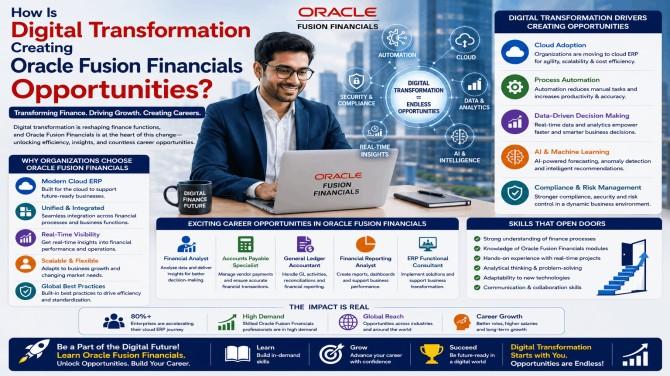
The truth is, digital transformation isn't a distant trend affecting only large tech companies. It's actively reshaping how finance departments operate everywhere, and that reshaping is directly creating new career opportunities around Oracle Fusion Financials. Here's how.
Moving Away From Manual, Paper-Heavy Processes
For decades, finance departments relied heavily on manual data entry, physical approvals, and disconnected spreadsheets to manage day-to-day operations. Digital transformation initiatives are pushing organizations to eliminate these inefficiencies entirely, replacing them with centralized, automated systems.
Oracle Fusion Financials sits right at the center of this shift. It replaces fragmented manual processes with a unified cloud platform that handles everything from invoice processing to financial consolidation. As more companies commit to this transformation, the need for professionals who can configure and manage these systems grows right alongside it.
Cloud Adoption Is No Longer Optional
A few years ago, cloud ERP adoption was still viewed as a forward-thinking choice rather than a necessity. That's changed. Digital transformation strategies across most industries now treat cloud migration as a baseline requirement, not an optional upgrade.
This urgency has directly fueled demand for professionals trained through structured Oracle Cloud Financials Training Online programs. Companies migrating from legacy systems need people who understand both the technical migration process and the functional finance side well enough to ensure the transition doesn't disrupt daily operations.
Real-Time Data Is Now the Expectation, Not the Exception
One of the clearest signs of digital transformation in finance is the shift toward real-time visibility. Executives no longer want to wait for month-end reports to understand financial health, they expect live dashboards, instant reconciliation status, and immediate access to key metrics.
Oracle Fusion Financials is built to support exactly this kind of real-time reporting through tools like OTBI and embedded analytics. Professionals who understand how to configure and optimize these reporting capabilities are increasingly valuable, since real-time visibility has become a core expectation rather than a nice-to-have feature.
Automation Is Reshaping Job Descriptions, Not Eliminating Them
A common misconception is that digital transformation, especially automation, threatens finance jobs. In practice, it's reshaping what those jobs actually involve. Routine tasks like data entry, basic reconciliations, and repetitive approvals are increasingly automated within Fusion Financials.
This shift means finance professionals spend less time on manual processing and more time on configuration, exception handling, and strategic analysis. Roles are evolving toward a blend of functional and technical expertise, exactly the kind of skill set built through a proper Oracle Fusion Financials Online Training program that covers both configuration and business context together.
Remote and Hybrid Work Models Have Expanded the Talent Pool
Digital transformation isn't limited to internal financial processes, it's also changed how organizations hire and manage talent. Since Oracle Fusion applications operate entirely in the cloud, companies are far more comfortable hiring remote professionals for implementation, support, and consulting work.
This has opened opportunities for professionals well beyond their immediate geographic location. Someone completing Oracle Cloud Financials Training Online today isn't limited to local job listings, they're eligible for remote roles with companies across different regions entirely.
Integration With Other Digital Systems Is Increasing Demand
Modern digital transformation strategies rarely involve a single standalone system. Organizations are integrating their financial platforms with procurement systems, HR platforms, supply chain tools, and customer relationship management software, all feeding into a unified data ecosystem.
Oracle Fusion Financials is frequently the financial backbone in these integrated environments. Professionals who understand how Financials connects with these other systems are positioned for higher-value roles compared to those with narrow, siloed knowledge of just one module.
Continuous Change Requires Continuous Learning
Digital transformation isn't a one-time project with a defined end date, it's an ongoing process. Oracle regularly updates Fusion Cloud applications with new features and capabilities, meaning professionals need to stay engaged with these changes long after their initial training ends.
This ongoing nature of digital transformation actually works in favor of trained professionals, since staying current becomes a competitive advantage rather than just routine maintenance.
Final Thoughts
Digital transformation isn't just changing how finance departments operate, it's actively creating sustained demand for Oracle Fusion Financials expertise across industries. From cloud migration and real-time reporting to automation and system integration, each of these shifts translates into genuine career opportunities. For professionals looking to align their skills with where finance is actually heading, investing in structured Oracle Fusion Financials Online Training right now positions them well ahead of a transformation that shows no signs of slowing down.