

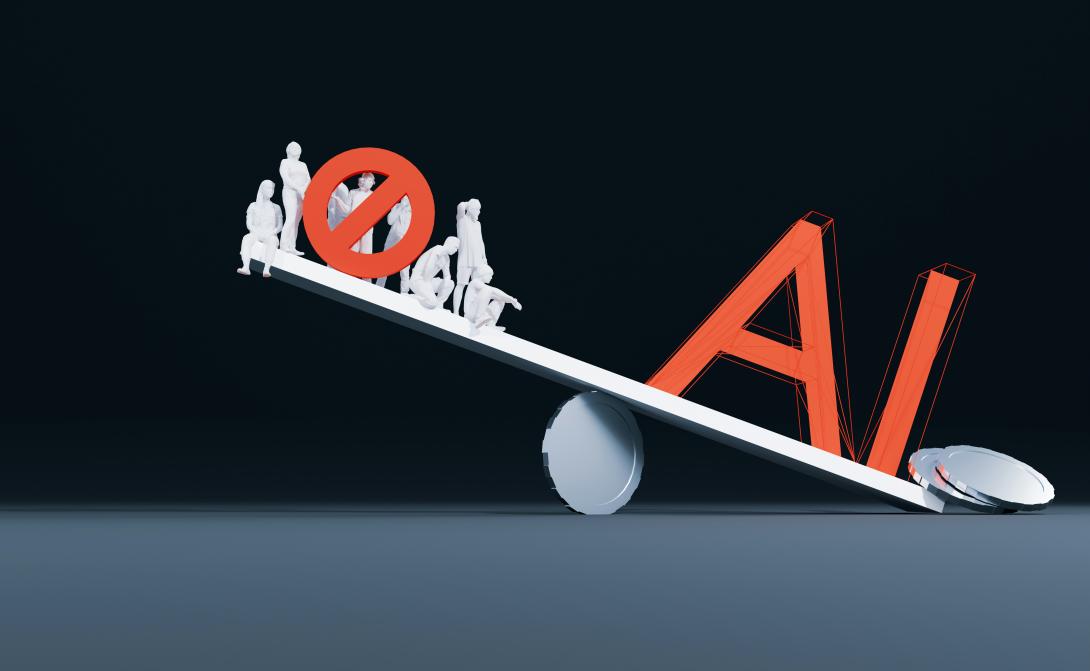
So you just got approval on the massive enterprise AI play from your executive team. Think predictive analytics for your global supply chain routing, generative AI copilot for customer support, and automated contract review for legal. Sounds and looks awesome on a slide.
In reality, though, 85% of corporate AI projects simply fail long before they truly see their day in the field, according to various reports from high-authority consultants.
That is because the executives are trying to construct a skyscraper on quicksand. An AI readiness assessment is thus a critical soil test you run before you ever pour concrete (of AI agents or autonomous systems). Instead of relying on pure luck or gut feelings, it gives you a systematic examination of an organization’s ability to adopt, deploy, scale, and sustain AI. This post will now explore exactly how a holistic AI readiness assessment can turn ambition into an actionable, reliable AI roadmap.
Deconstructing the AI Readiness Assessment
Primarily, the AI readiness assessment best practices identify an organization’s artificial intelligence maturity with regard to technical and workplace community attributes. So, you must learn about whether or not there is a sufficient budget at your fingertips, and also take a deep dive into enterprise architecture, i.e., the quality and hygiene of your data and operating models.
Besides, established industry frameworks look into such factors as business strategy, data foundation, AI governance, infrastructure, and organizational culture. Therefore, measuring maturity essentially allows companies to identify liability problems early. Remember, when critically important data pipelines are extremely fragile or nearly impossible to track, deploying AI only compounds the mess rapidly and at hyperspeed.
Cross-functional teams then find themselves in dead ends (and stripped of all the hype or hope), and all that comes to the surface is nothing but whether or not the infrastructure and processes had the right updates ahead of anything else. Regretting not doing that level of due diligence before the actual AI use case goes live is too costly and undermines most stakeholders’ initial expectations.
Key Pillars of Enterprise AI Readiness
To create a successful AI roadmap design, it is indeed critical to ensure the AI readiness exploration looks at three core pillars.
Data Infrastructure & Hygiene
Data is the lifeblood of all ML models. The readiness evaluation determines where your data lies, how well it connects, and if the data resides within integrated, well-organized data systems as opposed to separate silos. After all, silos introduce additional friction in AI-centric initiatives.
Departments must thus be able to assess data governance, metadata management, and data lineage, while also identifying current ETL, or extract, transform, load processes that are adequate for this specific role. In essence, when preparing to deploy an LLM, it needs to have its data evaluated for a tagged presence of unstructured data and easy enough access for loading vector databases without stale data or contradictive data.
Organizational Culture & Talent
Solely relying on technology, especially automation, will not yield satisfactory business transformation. The culture also requires an enthusiastic adaptation attitude. Your workforce should adopt these changes without feeling uneasy due to the excessive coverage of AI-associated employment threats by modern media.
Auditing existing departments for current MLOps engineers, data scientists, and AI-driven business analysts allows the assessment to identify areas where there are notable skill gaps. These analyses also determine how willing those across the workforce are to make this change and integrate AI into their own daily lives.
Consider that a firm’s data is clean, and it has infinite computing power available. AI still cannot make the firm’s business transformation happen on its own without its employees actually using it. In short, AI programs have an inability to perform without MLOps engineers, data scientists, and AI-driven business analysts working in harmony with the tools, such as agents or models. At the everyday job, AI must increase employees’ confidence and overall resilience to burnout to curb the resistance levels in adapting to AI as tools.
Translating an Assessment’s Findings into an Actionable Roadmap
The critical outcome of an AI readiness assessment is much more than some maturity score one would want to flaunt in PR media. Instead, it is all about making clear strategic decisions and prioritizing the removal of very specific, real blockers. Organizations will hence leverage these findings and move directly into a phased strategic roadmap, which is what the veterans would recommend.
Assessors find, with often extreme consistency, that what looks like the highly valued use case is not necessarily the least complicated one. Ideally, you want to map data scores to organizational strategy in a way that allows the company to prioritize use cases based on data availability, implementation complexity, and time to realize value.
Conclusion
Examining an organization’s current artificial intelligence capabilities may not seem like it will help at first glance, but it really will in the long run. How so? Leaders and teams will get an enormous amount of confidence because most blockers will be known early on instead of much later. Besides, preparing solutions to what can go wrong necessitates advanced insights, and AI readiness assessments deliver exactly those.
With readiness and maturity scores concerning AI, professionals will successfully convert an AI experiment into a resilient component of business development. The data foundations are also secured, blockers seem less frightening, and leaders finally have their strategic road map in place, all thanks to a reliable AI readiness examination.