

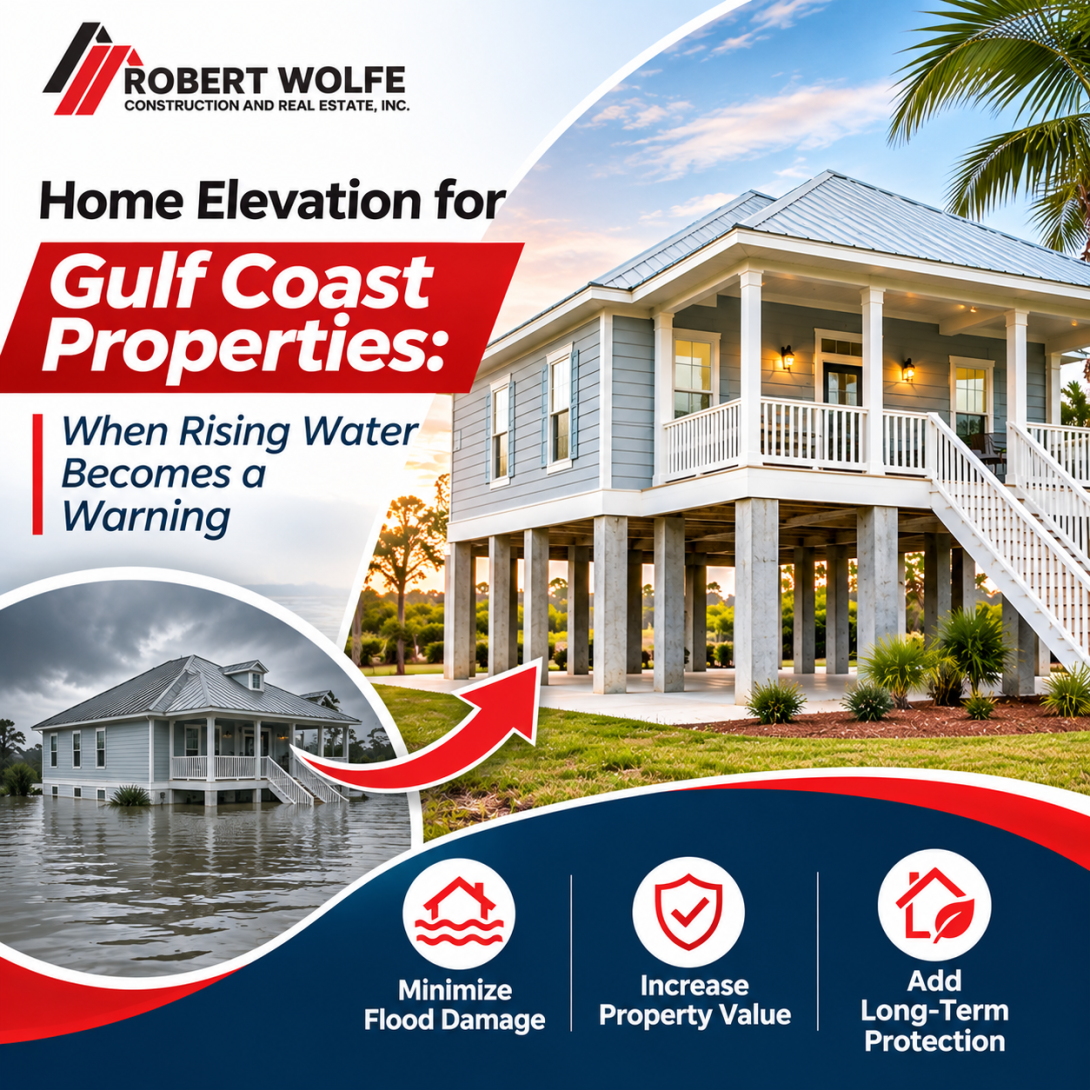
Residents of the Gulf Coast enjoy many benefits, but there are also concerns due to the region’s weather conditions. Homes in these areas are at risk of flooding because of repeated exposure to high-water events, including heavy rainfall, hurricanes, and storm surge. While some homeowners focus on improving drainage or making repairs after the last flood event, they may not be addressing the underlying issue, which could be the elevation of their home.
A house that sits too close to ground level or below the elevation needed to reduce flood exposure is at risk of floodwater affecting its foundation, interior spaces, and other building systems and components. Homeowners should pay attention to warning signs so they can take preventative measures to avoid further damage and expenses.
Long-term home elevation is a good flood mitigation strategy for properties along the Gulf Coast. Elevating a house provides the added benefit of reducing the risk of flood damage by increasing the distance between occupied living areas and potential floodwater. Ultimately, whether elevating a house is the best flood mitigation measure depends on local flood risks, the property’s existing elevation, and how close the home is to the elevation needed to reduce flood exposure.
Why Gulf Coast Homes Face Greater Flooding Concerns
There are several factors that increase the risk of flooding along coastlines. For example, hurricanes typically bring large amounts of rain and storm surge. Areas further inland may not be adjacent to any body of water and may still be at risk of flooding during heavy rainfall and major storm events.
One other problem is that flooding risk can differ between adjacent properties. Factors such as land elevation, foundation design, surrounding development, and how water flows across the land can all influence where and when flooding occurs.
The elevation and design of a home can affect flood exposure, even if the home has not flooded during previous events. Because of this, homeowners should assess their own risk rather than rely entirely on past flooding experiences. Different weather conditions and changing flood patterns can create new risks for properties that previously remained unaffected.
Warning Signs That Your Home May Need Elevation
Flood-related problems do not always begin with water entering the living area. In many cases, smaller warning signs appear before significant structural or interior damage occurs.
Recurring water accumulation around the foundation is one concern. If heavy rainfall regularly leaves standing water near the house, the property’s grading, drainage, and elevation should be evaluated. Persistent moisture can also contribute to deterioration of building materials and create conditions favorable to mold growth.
Other warning signs include repeated water intrusion through lower openings, flood damage to flooring and walls, moisture-related foundation problems, and mechanical equipment positioned in vulnerable areas.
Homeowners should also pay attention to how the property’s finished floor compares with surrounding ground levels and available flood elevation information. These observations do not automatically establish that elevation is necessary, but they can indicate when a professional assessment is worthwhile.
Understanding the Importance of Base Flood Elevation
Base Flood Elevation (BFE) is one of the most important terms in residential flood protection. BFE is the elevation to which floodwater is estimated to rise during the regulatory base flood event. Floodplain management regulations use these base flood levels to establish minimum elevations and requirements for development.
Floodplains are divided into zones, and depending on which zone your property is in, local regulations may vary. These zones typically define minimum elevation requirements for flood protection of structures and improvements on a given property. The flood zone, along with the unique characteristics of the property and building, helps determine the applicable local floodplain management regulations.
An elevation certificate can be a useful tool for determining a property’s elevation in relation to established flood benchmarks. Homeowners should consider obtaining an elevation certificate to help them understand and discuss potential flood risks and mitigation options with qualified professionals.
Just because a home meets the minimum elevation requirement does not mean the risk of flooding is eliminated. Even when minimum requirements are met, property owners should assess other on-site flood protection methods to help ensure a safer and drier residence.
How Home Elevation Helps Protect Residential Properties
One way to reduce the risk of flooding in a residence is to elevate the house. In this method, the house is raised and secured on a new, higher foundation. This increases the distance between the living areas of the house and potential floodwater. The process may require modifications to the home’s foundation and utilities, as well as the use of specialized lifting and rigging equipment.
Other site-specific factors may also be considered when determining the best method to mitigate flood risk. Home elevation is one such method. The benefits of this strategy may include reduced flood exposure, improved protection for interior spaces, and increased peace of mind.
A properly planned project can offer several benefits:
- Reduced flood exposure: Raising occupied living areas can help reduce the likelihood of floodwater entering the home during certain flooding events.
- Improved structural protection: An appropriately engineered foundation system can support the elevated structure and its long-term stability.
- Protection of interior investments: Reducing water exposure can help protect flooring, cabinetry, appliances, and other valuable interior components.
- Potential insurance benefits: Depending on the property’s circumstances and applicable insurance rules, elevation may improve flood insurance considerations.
- Long-term property resilience: A higher living floor can make a home better prepared for certain future flood conditions.
The actual benefits depend on the final elevation, foundation design, flood characteristics, and applicable requirements.
What Goes Into a Residential Home Elevation Project?
Raising an existing house is a specialized construction undertaking that requires careful preparation. Every property has different structural characteristics, so the project must be evaluated individually rather than approached using a standard lifting plan.
The process generally begins with an inspection of the existing foundation, framing, structural condition, and site characteristics. Survey information and applicable flood elevation requirements help establish how much the structure may need to be raised.
Once the project has been evaluated, an appropriate lifting and foundation strategy can be developed. The house is supported using specialized equipment while the existing foundation is addressed or modified according to the approved design. After the structure reaches its intended height, it is secured to the new or modified foundation.
Additional work may involve adjusting plumbing, electrical connections, HVAC equipment, stairs, entrances, and exterior features. Permitting, engineering coordination, and inspections are also important parts of the process.
Because lifting a house involves substantial structural work, property owners should work with experienced professionals who understand the technical requirements and local construction conditions.
Why Foundation Design and Structural Stability Matter
Raising a house is not simply a matter of lifting it several feet above the ground. The new foundation must be designed to support the structure safely while accounting for applicable loads and site conditions.
Foundation selection depends on several factors, including soil characteristics, building weight, structural configuration, flood exposure, and local engineering requirements. Depending on the property, the appropriate solution may involve piles, piers, or another engineered foundation system.
The connection between the elevated structure and its foundation is equally important. Proper anchoring and structural reinforcement help ensure that the house remains stable under anticipated environmental conditions.
A professional engineering assessment helps determine the appropriate approach and identifies any existing structural concerns that should be addressed during the project.
Home Elevation Versus Other Flood Protection Solutions
Not every property experiencing water problems requires a complete elevation project. In some situations, improving drainage, correcting grading, installing appropriate flood barriers, or relocating vulnerable equipment may provide meaningful protection.
However, these measures address different aspects of flood exposure. Drainage improvements can help manage surface water, but they may not adequately protect a house located below relevant flood levels. Similarly, flood-resistant materials can reduce damage without necessarily preventing water from entering the structure.
Homeowners should compare available solutions based on the source of flooding, existing floor elevation, structural condition, regulatory requirements, and long-term costs.
For properties with recurring flooding that threatens occupied living spaces, raising the structure may deserve serious consideration.
Planning Ahead Can Reduce Future Flood-Related Costs
Many homeowners wait until significant flood damage occurs before exploring elevation. Unfortunately, repeated repairs can become expensive, particularly when water affects structural components, electrical systems, flooring, and interior finishes.
Proactive planning allows property owners to understand their options before another major weather event. It also provides more time to evaluate contractors, obtain engineering recommendations, understand permitting requirements, and establish a realistic project budget.
Beyond the immediate construction expense, homeowners should consider the potential long-term costs of maintaining a flood-prone property. Insurance, recurring repairs, property usability, and future maintenance all contribute to the overall financial picture.
The best flood mitigation strategy is the one that reduces the property’s flood risk as effectively as possible while protecting the property’s long-term value.
End Summary
Water levels along the Gulf Coast are rising, increasing flood concerns for homeowners in the area. Home elevation can improve a property’s flood resilience and help protect valuable living spaces from floodwater. Depending on the options available to them, homeowners may wish to consider professionally planned Home Elevation Gulf Coast projects to protect their properties and prepare for changing environmental conditions. Raising a home to reduce its exposure to flooding is an investment that can provide greater peace of mind and long-term protection. With appropriate engineering recommendations, foundation design, and construction planning, homeowners can make informed decisions about protecting their properties from future flood risks.
The Article “Home Elevation for Gulf Coast Properties: When Rising Water Becomes a Warning” was originally posted here.