
The global Frozen Yogurt Market is witnessing steady growth due to increasing consumer interest in healthier dessert alternatives and innovative food products. Frozen yogurt is becoming a popular choice among consumers seeking a refreshing dessert with different flavors, textures, and nutritional profiles. Its availability through specialty stores, supermarkets, and online platforms is further improving market accessibility.
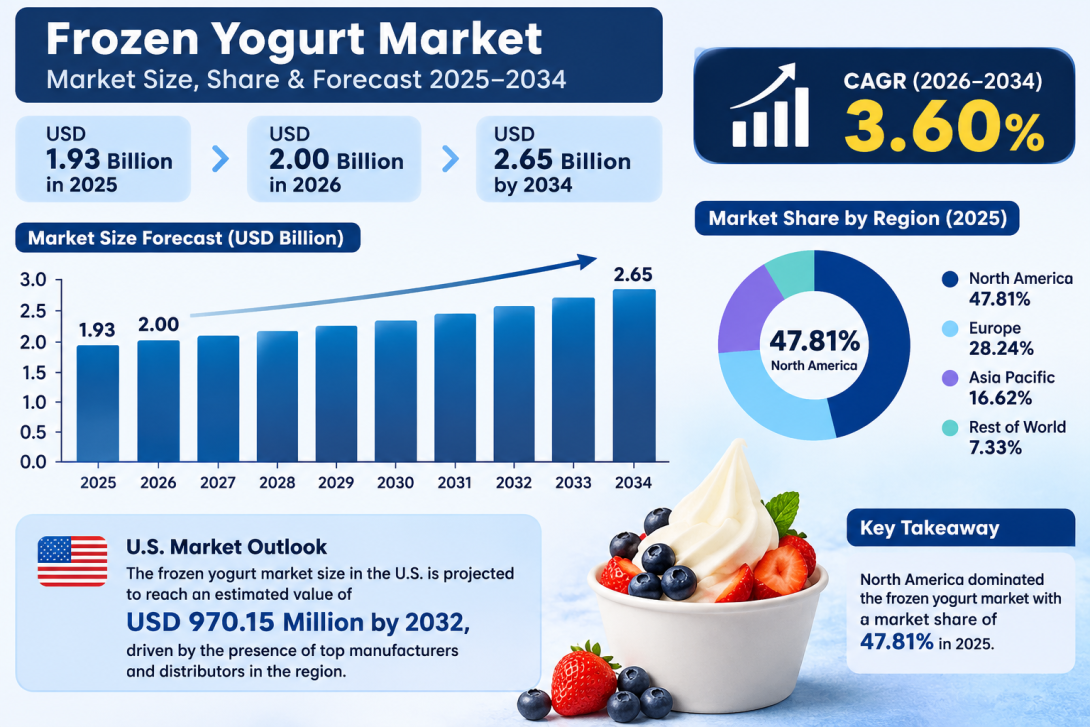
According to Fortune Business Insights, the global Frozen Yogurt Market Size was valued at USD 1.93 billion in 2025. The market is projected to grow from USD 2.00 billion in 2026 to USD 2.65 billion by 2034, registering a CAGR of 3.60% during the forecast period (2026–2034). North America dominated the market with a share of 47.81% in 2025. Furthermore, the U.S. frozen yogurt market is projected to reach USD 970.15 million by 2032, supported by the presence of established manufacturers and distributors.
Growing Demand for Healthier Dessert Alternatives
Increasing health awareness is one of the major factors supporting the growth of the Frozen Yogurt Market. Consumers are becoming more conscious of their dietary habits and are exploring alternatives to conventional desserts. Frozen yogurt is often considered an attractive option because certain varieties contain beneficial live cultures and offer lower-fat formulations.
The growing popularity of wellness-focused lifestyles is encouraging manufacturers to introduce products with reduced fat, lower sugar content, and improved nutritional profiles. These developments are helping frozen yogurt attract consumers looking for a balance between taste and dietary preferences.
Rising Popularity of Innovative Flavors and Self-Serve Models
Product innovation is playing an important role in expanding the frozen yogurt industry. Manufacturers are introducing different flavors, including chocolate, strawberry, mango, banana, and pineapple, to attract consumers with varied preferences. Seasonal flavors and fruit-based combinations are also helping brands maintain consumer interest.
Additionally, self-serve frozen yogurt stores are becoming increasingly popular. These outlets allow customers to select their preferred flavors, toppings, and serving quantities. This customizable experience is encouraging repeat purchases and supporting the expansion of specialty frozen yogurt outlets.
For detailed market insights : https://www.fortunebusinessinsights.com/industry-reports/frozen-yogurt-market-100799
Flavor Analysis
Based on flavor, the market is segmented into chocolate, mango, banana, strawberry, pineapple, and others.
Chocolate: The chocolate segment is expected to dominate the market, accounting for a projected share of 42.39% in 2026. Its widespread popularity among different age groups and consistent consumer demand support its leading position.
Mango: Mango-flavored frozen yogurt attracts consumers seeking fruity and refreshing dessert options. Its popularity is particularly relevant in tropical and emerging markets.
Banana: Banana-based products offer a familiar fruit flavor and provide opportunities for manufacturers to develop different dessert combinations.
Strawberry: Strawberry remains a popular flavor because of its sweet taste and broad consumer acceptance. Manufacturers are introducing new strawberry-based combinations to expand their product portfolios.
Pineapple and Others: Pineapple and other innovative flavors contribute to product diversification and help brands target consumers interested in unique dessert experiences.
Fat Content Analysis
Based on fat content, the Frozen Yogurt Market is divided into low-fat (0.5%–2%) and no-fat (less than 0.5%) products.
Low-fat frozen yogurt represents an important category because it provides consumers with an alternative to traditional high-fat desserts. Its affordability and availability support demand across several developing markets.
No-fat frozen yogurt is gaining attention among health-conscious consumers, particularly in developed countries. Increasing interest in calorie-conscious diets and reduced-fat food products is encouraging manufacturers to expand their no-fat product offerings.
Distribution Channel Analysis
Based on distribution channels, the market is categorized into specialty stores, online sales, supermarkets and hypermarkets, retailers, and others.
Specialty stores are expected to remain a leading distribution channel, accounting for a projected market share of 32.78% in 2026. Their popularity is supported by customized serving options, self-service formats, and the availability of multiple flavors and toppings.
Online sales are becoming increasingly important as consumers adopt digital purchasing platforms. Supermarkets and hypermarkets provide convenient access to packaged frozen yogurt products, while grocery retailers support product availability across residential areas.
Regional Analysis
The global Frozen Yogurt Market is studied across North America, Europe, Asia Pacific, South America, and the Middle East & Africa.
North America: North America dominated the global market with a 47.81% share in 2025, reaching USD 0.92 billion. The region's leadership is supported by established manufacturers, strong distribution networks, and growing demand for healthier dessert alternatives. The popularity of self-serve frozen yogurt outlets is also contributing to regional growth.
Europe: Europe accounted for USD 0.54 billion in 2025, representing 27.89% of the global market. Increasing consumer interest in nutritious food products and the established dairy industry are supporting market development.
Asia Pacific: The region generated USD 0.27 billion in 2025. Rising disposable incomes, urbanization, changing food preferences, and growing awareness of frozen desserts are creating new opportunities for manufacturers.
South America: Increasing consumption of frozen desserts in countries such as Brazil and Argentina is supporting regional market development. Expanding retail distribution is also improving product accessibility.
Middle East & Africa: Growing urban populations, changing consumer preferences, and improvements in food retail infrastructure are contributing to the gradual expansion of the frozen yogurt industry.
Competitive Landscape
Companies operating in the Frozen Yogurt Market are focusing on product innovation, flavor diversification, distribution expansion, and specialty store development. Several established brands are also introducing plant-based alternatives and customized dessert options to address changing consumer preferences.
Key companies operating in the market include:
- Danone
- Pinkberry
- Honey Hill Farms
- Scott Brothers Dairy
- Red Mango Inc.
- Yogurtland Inc.
- Gujarat Cooperative Milk Marketing Federation
- Nestlé S.A.
- General Mills
Recent Industry Developments
The frozen yogurt industry continues to experience product innovation and strategic expansion. In August 2023, Unilever planned to expand its U.S.-based frozen yogurt brand Yasso into the U.K. market, reflecting growing interest in international market opportunities.
In March 2023, Halo Top introduced new frozen yogurt pops made with yogurt, fruit, and granola in triple berry and strawberry flavors. These developments highlight the industry's focus on innovative product formats and differentiated dessert offerings.
Get Free Sample PDF: https://www.fortunebusinessinsights.com/enquiry/request-sample-pdf/frozen-yogurt-market-100799
Future Outlook
The global Frozen Yogurt Market is expected to experience steady growth through 2034, supported by rising health awareness, changing consumer preferences, and continuous product innovation. Increasing demand for low-fat and no-fat varieties, together with the introduction of new flavors, is expected to create opportunities for manufacturers.
Furthermore, the expansion of specialty stores, self-serve outlets, and online distribution channels will improve product accessibility across different regions. North America is expected to maintain an important position in the global industry, while emerging markets may offer additional growth opportunities. With a projected CAGR of 3.60% during 2026–2034, the Frozen Yogurt Market is positioned for consistent long-term development.
Related Report
Explore Japan’s Market Opportunities - Latest - Frozen Yogurt Market Size - Insights