
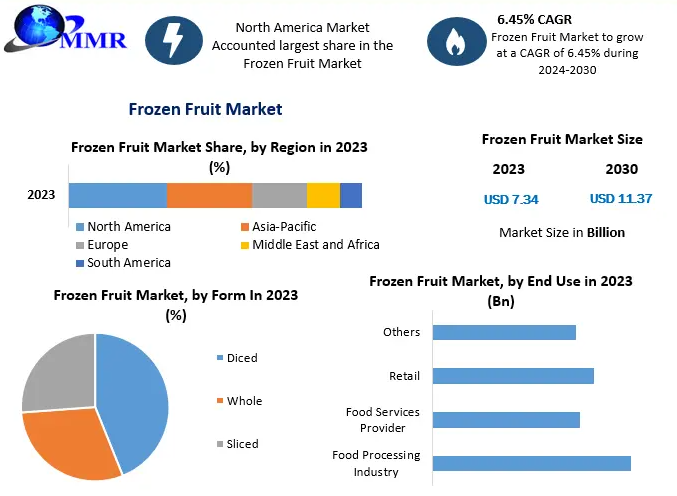
Market Estimation & Definition
The Frozen Fruit Industry was valued at USD 7.34 billion in 2023 and is projected to reach USD 11.37 billion by 2030, growing at a compound annual growth rate (CAGR) of 6.45% during the forecast period from 2024 to 2030. Frozen fruits are fruits that are picked at peak ripeness and then flash-frozen to preserve their nutritional value, flavor, and texture. This process allows for year-round availability of seasonal fruits, catering to consumer demand for convenient and healthy food options.
Market Overview
Frozen Fruit is used as a dessert typically made from real fruit such as strawberries, berries, and peaches. These fruits are frozen in very low temperatures, picked at the ripping stage flash frozen, and cooled till the freezing point to preserve the nutritional benefits. Most of the fruits are best preserved when packed in sugar or a sugar syrup. The amount of sugar to be used will depend on the sweetness of the product and the family's preference for sweetness. In general, three to four pounds of the fruit to one pound of granulated sugar is about the right time. However use of frozen fruit in desserts requires less sugar, so consumer-focused product development is a major opportunity for frozen fruit products and manufacturers.
Ask for Sample to Know US Tariff Impacts on Frozen Fruit Industry @ https://www.maximizemarketresearch.com/request-sample/221569/
Market Dynamics
Consumer convenience to increase the demand for Frozen Fruit The changing consumer preference is a major and crucial factor shaping and raising the Frozen Fruit market. The consumer's preferred choices for healthy and convenient food products and options are the driving factors for the growth of the frozen fruit market.
Rising prices for the production of Frozen Fruits The rising costs associated with producing frozen fruit, including labor, energy, and transportation, could lead to higher consumer prices, potentially reducing demand. Frozen fruit faces strong and constant competition from fresh, canned, and dried fruit, with fresh fruit being the most direct competitor due to its similar health benefits and convenience.
Following a wellness-driven trend and emersion in a new market The frozen fruit market holds immense potential for expansion into emerging markets, particularly in regions witnessing rising disposable incomes and growing health consciousness among consumers. A surge in demand for novel and innovative frozen fruit products, such as fruit blends, smoothies, and fruit-based snacks, presents a lucrative opportunity for manufacturers.
Intense Competition in the Frozen Fruit Market Consumer misconceptions about the quality and freshness of frozen fruit compared to fresh fruit can challenge the frozen fruit market growth. Manufacturers must effectively address these intentions by emphasizing the nutritional value and proper quality control measures employed throughout the frozen fruit production process.
Emerging Trends Shaping the Future
The frozen fruit market is witnessing several emerging trends:
- Organic and Non-GMO Products: There is a growing demand for organic and non-genetically modified frozen fruits, reflecting broader health and sustainability concerns.
- Exotic and Specialty Fruits: Consumers are exploring new flavors, leading to an increase in the availability of exotic fruits like dragon fruit and acai berries in frozen form.
- Sustainable Packaging: Manufacturers are adopting eco-friendly packaging options in response to environmental concerns.
Explore the full report for an in-depth analysis: https://www.maximizemarketresearch.com/market-report/frozen-fruit-market/221569/
Segmentation Analysis
The frozen fruit market is segmented based on nature and form:
- By Nature:
- Organic: Gaining popularity due to health and environmental benefits.
- Conventional: Still holds a significant market share due to affordability.
- By Form:
- Diced: Preferred for smoothies and baking.
- Whole: Used in desserts and as toppings.
- Sliced: Convenient for snacking and cooking.
Country-Level Analysis
- United States: The U.S. market was valued at USD 4.29 billion in 2023. The growth is driven by increasing consumer preference for nutritious, convenient products, and the popularity of smoothies and frozen desserts.
- Germany: Germany has witnessed a combined annual growth rate of over 4.5% in frozen fruit demand, as the health-centric population increasingly pursues frozen foods as an easy-to-prepare alternative.
Competitor Analysis
The frozen fruit market is characterized by numerous small and medium-sized players focusing on technological development and new product launches. Companies are investing in research and development to introduce innovative products and expand their market presence.
Conclusion
The global frozen fruit market is poised for significant growth, driven by health trends, convenience, and innovation. With increasing demand for organic, exotic, and clean-label products, manufacturers have ample opportunities to expand their offerings and cater to evolving consumer preferences. Strategic partnerships, technological advancements, and sustainable practices will be key to capitalizing on this growing market.
About Us
Maximize Market Research is one of the fastest-growing market research and business consulting firms serving clients globally. Our revenue impact and focused growth-driven research initiatives make us a proud partner of majority of the Fortune 500 companies. We have a diversified portfolio and serve a variety of industries such as IT & telecom, chemical, food & beverage, aerospace & defense, healthcare and others.
Contact Maximize Market Research
MAXIMIZE MARKET RESEARCH PVT. LTD.
2nd Floor, Navale IT park Phase 3,
Pune Banglore Highway, Narhe
Pune, Maharashtra 411041, India.
+91 9607365656