

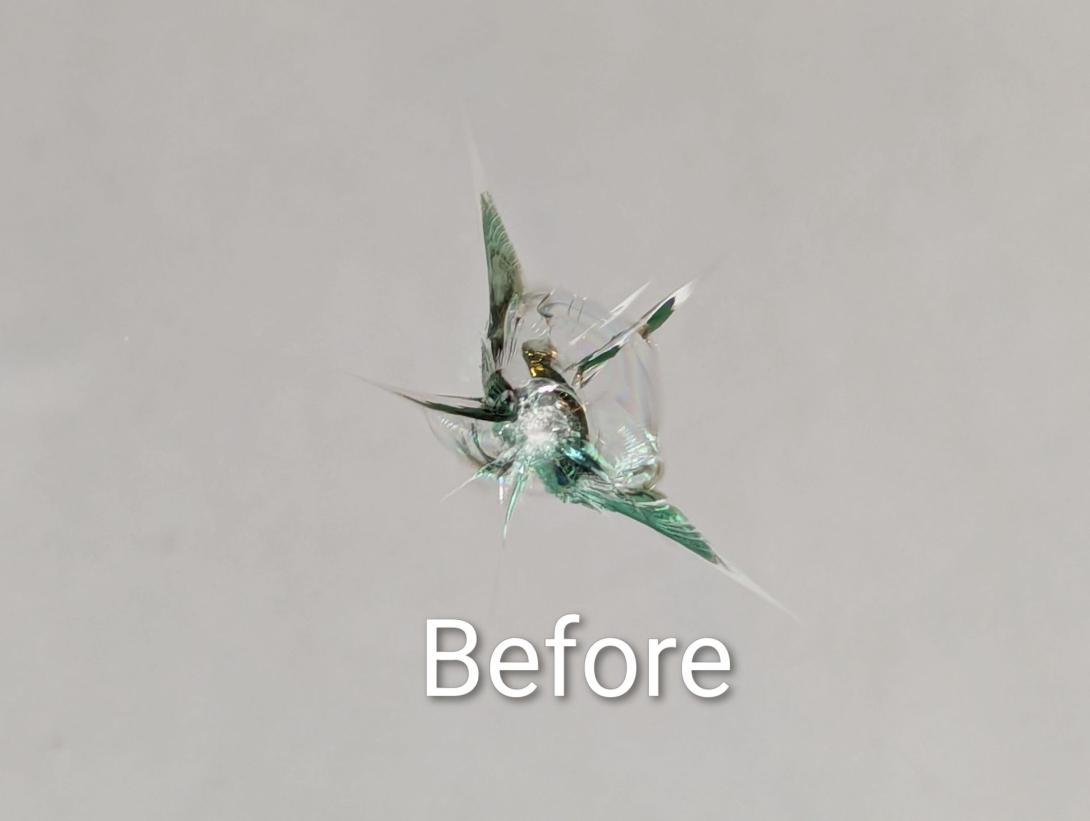
Does the specific viscosity of a repair resin actually change the outcome of a windshield repair, or is one general-purpose formula close enough for most jobs? Many shops assume the latter, and that assumption shows up in inconsistent repair results.
Windshield repair resins are engineered across a range of viscosities for a reason, and matching the right formula to the specific damage type is one of the clearest differences between an inconsistent shop and a reliable one.
Why Most Shops Answer This Wrong
Stocking a single general-purpose resin feels simpler and keeps inventory costs down. That approach treats a small stone chip and a long edge crack as fundamentally similar problems, when the physical requirements of filling each are quite different.
A thin chip resin flows easily into a small break but lacks the body to properly fill a long crack. A thick edge-crack formula, by contrast, will not penetrate a small chip's fine fracture lines the way a low-viscosity resin does.
What the Data Actually Shows
The windshield repair kit market is projected to grow from roughly 312.4 million dollars in 2026 to 518.9 million dollars by 2035, a 5.80 percent compound annual growth rate, according to windshield repair kit market research, with service centers representing the fastest-growing end user segment as fleet maintenance contracts standardize repair protocols.
That standardization trend matters directly for shops. Fleet contracts increasingly specify repair quality benchmarks, and inconsistent results from mismatched resin viscosity put those contracts at risk more than almost any other single factor in the repair process.
A Better Framework
Rather than stocking one resin for every job, match viscosity to damage type deliberately. Low-viscosity resins, typically in the 20 to 100 CPS range, suit small stone chips where fine fracture penetration matters most. Mid-viscosity resins in the 200 to 400 CPS range handle standard crack repair, where the resin needs enough body to fill a longer break without excessive runout.
High-viscosity edge crack formulations, often in the 1600 to 2400 CPS range, exist specifically for perimeter damage near the windshield's edge, where a thinner resin would run out of the repair area before curing.
Implementation Steps
1. Stock at least chip, standard crack, and edge crack viscosity resins separately rather than relying on one general-purpose formula.
2. Match resin choice to damage type and location before beginning the repair, not just damage size.
3. Pair the correct resin with an appropriate adhesion promoter and curing light exposure time, since even correctly matched resin underperforms without proper surface preparation.
Why Curing Conditions Compound the Viscosity Question
Viscosity and curing exposure interact more than many shops realize. A thicker edge-crack resin generally needs longer or more intense UV exposure to cure fully through its depth, while a thinner chip resin cures faster but can be prone to shrinkage if rushed. Treating every resin with the same generic curing time, regardless of viscosity, undermines even a correctly matched resin choice.
Ambient temperature affects this further. Cold weather slows resin flow into fine fracture lines regardless of viscosity grade, which is why many professional-grade systems pair specific resins with pre-warming steps or adjusted curing light exposure times for cold-weather repairs.
What This Means for Shop Training
Standardizing viscosity selection only works if technicians are actually trained to make the distinction consistently, rather than defaulting to whatever resin happens to be within reach. Shops that build a simple decision reference, matching damage type and size to a specific resin and curing protocol, see far less variation in outcomes across different technicians than shops relying on individual judgment alone.
That consistency matters increasingly as fleet contracts formalize repair quality expectations. A shop that can demonstrate a standardized, documented process for matching resin to damage type has a stronger case in any quality dispute than one relying on technician experience alone.
What This Means for Repair Quality Claims
Properly matched resin and technique can restore a windshield to a meaningful percentage of its original strength rather than merely filling the visible damage cosmetically. Shops that standardize this matching process consistently produce repairs that hold up to inspection and fleet quality benchmarks, rather than results that vary from technician to technician.
Windshield repair resins chosen by damage type, not convenience, are what separate shops winning repeat fleet contracts from those losing them to inconsistent outcomes. The question is not whether one resin is "good enough," but whether a shop is willing to standardize the small additional step of matching viscosity to the job in front of them.