

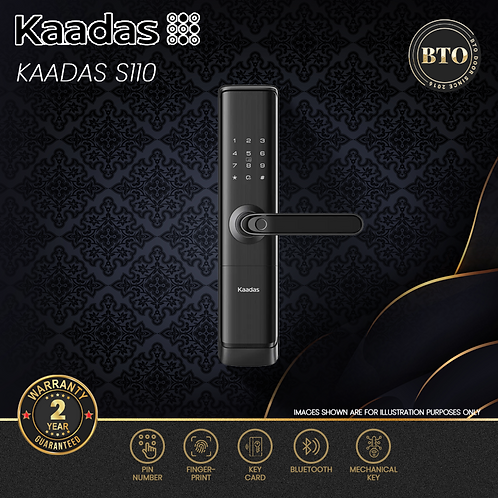
When choosing between a smart digital lock and a traditional lock, the answer depends on what you value most — convenience, long-term security, or cost. Digital locks offer keyless access, audit trails, and remote control, making them well-suited for modern homes. Traditional locks are simpler and cheaper upfront but require physical keys and offer fewer security layers.
For homeowners in Singapore, upgrading to a smart digital lock in Singapore has become a practical decision — not just a lifestyle upgrade. As HDB flats and condominiums become smarter, the choice between old and new locking systems carries real consequences for safety and daily life. This comparison breaks down the key differences so you can make an informed choice.
What Is the Core Difference Between Digital and Traditional Locks?
Traditional locks use a mechanical key-and-cylinder system. You insert a key, turn it, and the door opens. Digital locks replace that mechanism with electronic authentication fingerprints, PIN codes, RFID cards, mobile apps, or a combination of these methods.
Both serve the same purpose. But how they serve it and how well varies significantly across security, convenience, and durability.
Convenience: Digital Locks Win by a Clear Margin
Losing a key in Singapore is more than a minor inconvenience — it often means calling a locksmith at odd hours and paying premium rates. With a digital lock, there are no keys to lose.
Here is where digital locks stand out in daily use:
- Grant temporary access codes to family members, domestic helpers, or contractors — without duplicating physical keys
- Unlock your door with a fingerprint in under a second
- Receive smartphone alerts when someone enters or exits (available on Wi-Fi-enabled models)
- Manage access remotely while you are at work or travelling
Traditional locks offer none of this. If you have children who forget their keys regularly, or a cleaner who visits once a week, managing physical keys quickly becomes a logistical headache.
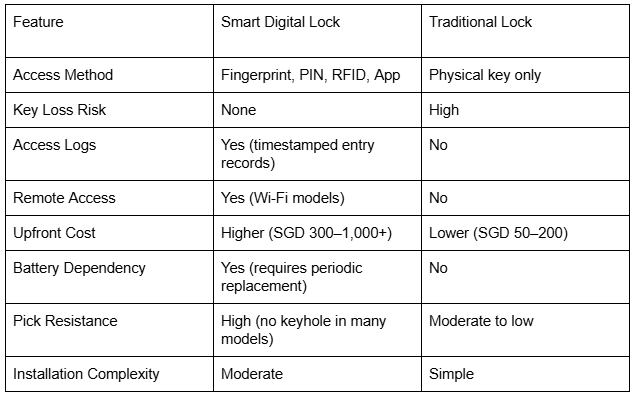
Digital Lock vs Traditional Lock: A Side-by-Side Comparison
Home Security Singapore: Which Lock Actually Keeps You Safer?
In Singapore, home burglary rates remain relatively low compared to global averages — a point often attributed to high-density housing design and community vigilance. That said, home security remains a top priority for HDB and condominium residents, particularly as opportunistic crimes do still occur.
Traditional pin tumbler locks are vulnerable to lock-picking, bump keys, and forced entry using simple tools. A skilled intruder can bypass a standard lock in under a minute using widely available techniques.
Digital locks address several of these vulnerabilities:
- No keyhole means no lock-picking or key bumping
- Auto-lock features prevent doors from being left accidentally unlocked
- Wrong PIN alerts notify you of repeated failed access attempts
- Tamper alarms sound when the lock is physically forced
That said, digital locks are not impervious. Power failure, battery drain, or software vulnerabilities can create access issues. Quality models include emergency backup options such as a physical key override, USB charging port for emergency power, or a backup PIN panel.
What About Hacking and Cybersecurity Risks?
This is a legitimate concern for Wi-Fi-enabled smart locks. However, reputable brands use AES-128 or AES-256 encryption — the same standard used in banking applications. The risk of a targeted cyberattack on a residential digital lock is extremely low. Physical break-in remains a far more common threat.
For added peace of mind, choose a digital lock that stores data locally rather than exclusively on cloud servers, and ensure firmware is kept updated.
Maintenance and Long-Term Value
Traditional locks are mechanically simple. They rarely fail unless they are physically damaged or the key wears down over time. Maintenance is almost negligible an occasional spray of lubricant is about all they need.
Digital locks require more attention, but less than most homeowners expect:
- Battery replacement: Most models run on AA batteries lasting 6–12 months with normal use
- Firmware updates: Higher-end smart locks receive periodic software updates for security patches
- Fingerprint sensor cleaning: Occasional wiping keeps biometric accuracy high
In terms of long-term value, digital locks cost more upfront but reduce recurring expenses. You will never need to cut duplicate keys, replace locks after a lost key, or pay an emergency locksmith. For a busy household in Singapore, these savings add up quickly over 5–10 years of ownership.
Which Lock Is Right for Your Home?
Choose a Digital Lock If:
- You have children, elderly parents, or frequent guests who need easy access
- You employ a domestic helper and want trackable, time-limited entry
- You travel frequently and want remote monitoring
- You want auto-locking features for peace of mind
- You are renovating or upgrading your HDB or condo unit
Choose a Traditional Lock If:
- You need an immediate, low-cost solution
- You prefer a fully mechanical system with no electronic dependency
- You are renting and cannot make permanent modifications
It is worth noting that many Singapore homeowners now use a hybrid approach — installing a digital lock on the main gate or front door while keeping a traditional lock as a secondary measure. This gives you the benefits of both systems without fully replacing one.
Smart Digital Lock Singapore: What to Look for Before You Buy
Not all digital locks offer the same level of protection or reliability. Before purchasing, evaluate these factors:
- Singapore-certified models: Look for locks that meet Singapore Standards (SS) certifications or are tested under local fire safety and door compatibility requirements
- Multi-access modes: Fingerprint + PIN + RFID gives you backup options if one method fails
- Emergency backup: A physical key override or USB emergency charging port is essential
- Warranty and after-sales support: Ensure local servicing is available
- Door compatibility: Verify the lock fits your existing HDB gate, timber door, or metal door frame
For homeowners upgrading their main entrance, BToDoor offers a curated range of digital locks suited to HDB flats, condominiums, and landed properties in Singapore with professional installation and local after-sales support. You can explore their full collection at BToDoor.
FAQ: Digital Lock vs Traditional Lock in Singapore
1: Are digital locks safer than traditional locks in Singapore?
Yes, in most cases. Digital locks eliminate vulnerabilities like lock-picking and key duplication. Features like auto-lock, tamper alarms, and access logs add security layers that traditional locks simply cannot offer.
2: What happens if a digital lock runs out of battery?
Most digital locks include a low-battery warning and an emergency power option — either a USB charging port or a physical key override — ensuring you are never locked out due to a dead battery.
3: Can digital locks be hacked?
High-quality digital locks use AES encryption and are extremely difficult to hack remotely. The risk is negligible compared to traditional physical break-in methods, which remain the more realistic threat for residential properties in Singapore.
4: How long do digital lock batteries last?
Most digital locks use standard AA batteries lasting between 6 to 12 months under normal household usage. The lock will typically alert you with a sound or indicator light when battery levels run low.
5: Is a digital lock suitable for HDB flats in Singapore?
Yes. Many digital lock models are specifically designed for HDB door frames and gate dimensions. Always confirm door compatibility with the supplier before purchase to ensure a proper fit and avoid installation issues.
6: Is the upfront cost of a digital lock worth it?
For most Singapore homeowners, yes. The long-term savings on locksmith fees, key duplication, and lock replacements — combined with added security features — typically outweigh the higher initial investment within a few years of use.