
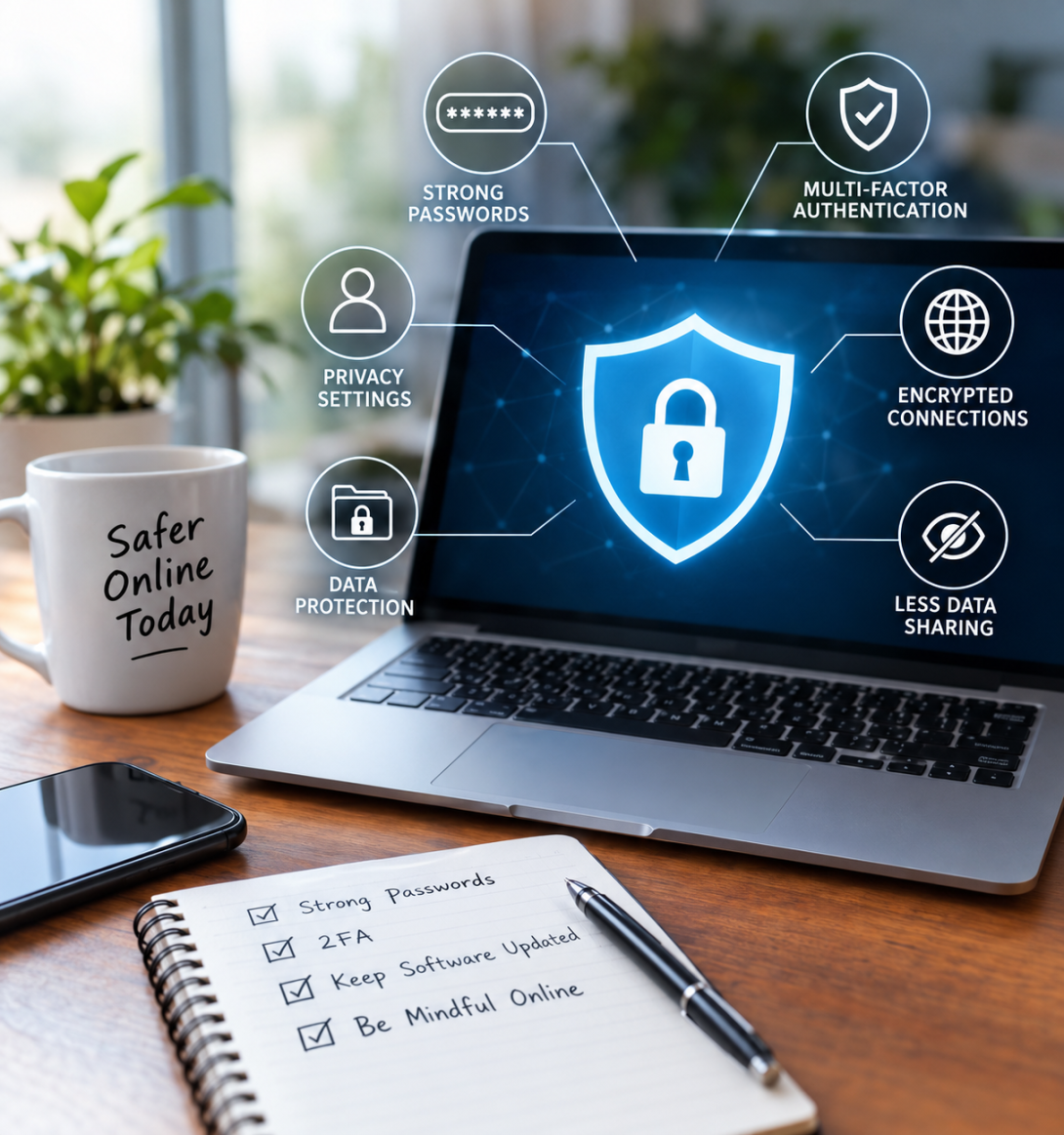
Our digital lives contain an enormous amount of personal information, from email addresses and passwords to financial details, location data and private conversations. Data breaches, phishing attacks, tracking technologies and weak account security can expose this information without warning. Understanding basic cybersecurity and privacy practices can significantly reduce the risk of identity theft, account compromise and unwanted data collection.
Why Data Breaches Are a Serious Privacy Risk
A data breach occurs when unauthorized individuals gain access to information held by a company, organization or online service. Exposed information can include names, email addresses, passwords, phone numbers, payment details and other personal records. Even when a breach does not immediately result in fraud, leaked information can remain available for years and may be combined with information from other breaches.
One of the most important protections is to avoid reusing passwords. If the same password is used for multiple accounts and one service is compromised, attackers may attempt to use those credentials elsewhere. Regularly reviewing important accounts and changing compromised credentials can help limit the damage from a breach.
Use Strong Passwords and Multi-Factor Authentication
Long, unique passwords are an important foundation of account security. A password manager can make it easier to create and store a different password for every website without requiring you to memorize them all.
Multi-factor authentication (MFA) provides another layer of protection. Instead of relying only on a password, MFA requires an additional verification method, such as an authenticator application, security key or another approved factor. Passkeys are also becoming an alternative to traditional passwords and are designed to make phishing more difficult.
Protect Your Personal Information Online
Privacy is not only about keeping passwords secure. Consider how much personal information you provide when creating accounts, filling out forms or using social networks. Avoid sharing information that a service does not genuinely need, and periodically review privacy settings on your accounts and devices.
Software updates are another important part of personal cybersecurity. Operating systems, browsers, applications and mobile devices frequently receive security fixes. Enabling automatic updates where practical can reduce exposure to known vulnerabilities.
Understanding Tor and Online Anonymity
Tor is a privacy technology that routes internet traffic through multiple relays and uses layers of encryption. It can help prevent websites from directly learning a user's IP address and can provide greater privacy when browsing the internet.
However, Tor should not be confused with perfect anonymity. Users can still identify themselves by voluntarily providing names, email addresses, phone numbers or other personal information. Browser configuration, downloaded files, account logins and other behaviors can also affect privacy. For ordinary browsing, the official Tor Browser is designed with privacy and anti-fingerprinting protections in mind.
People researching privacy-related resources may also encounter discussions about a best dark web search engines. Understanding how search technology, privacy networks and anonymity tools work can be useful from a cybersecurity education perspective, but these technologies should always be approached with caution and used lawfully.
HTTPS and Secure Connections
HTTPS encrypts information exchanged between your browser and a website, helping protect sensitive data such as login credentials and payment information while it travels across the internet. Look for HTTPS when entering private information, but remember that encryption does not automatically mean a website itself is trustworthy.
Build Better Digital Security Habits
Good cybersecurity is usually the result of several simple habits working together. Use unique passwords, enable MFA, keep devices updated, limit the personal information you share, be cautious with unexpected links and attachments, back up important files, and review account security settings regularly.
Online privacy cannot be guaranteed completely, but individuals can substantially reduce unnecessary exposure by understanding how their information is collected, transmitted and stored. A combination of sensible security practices, privacy-conscious browsing and careful management of personal data provides a practical foundation for safer digital life.