

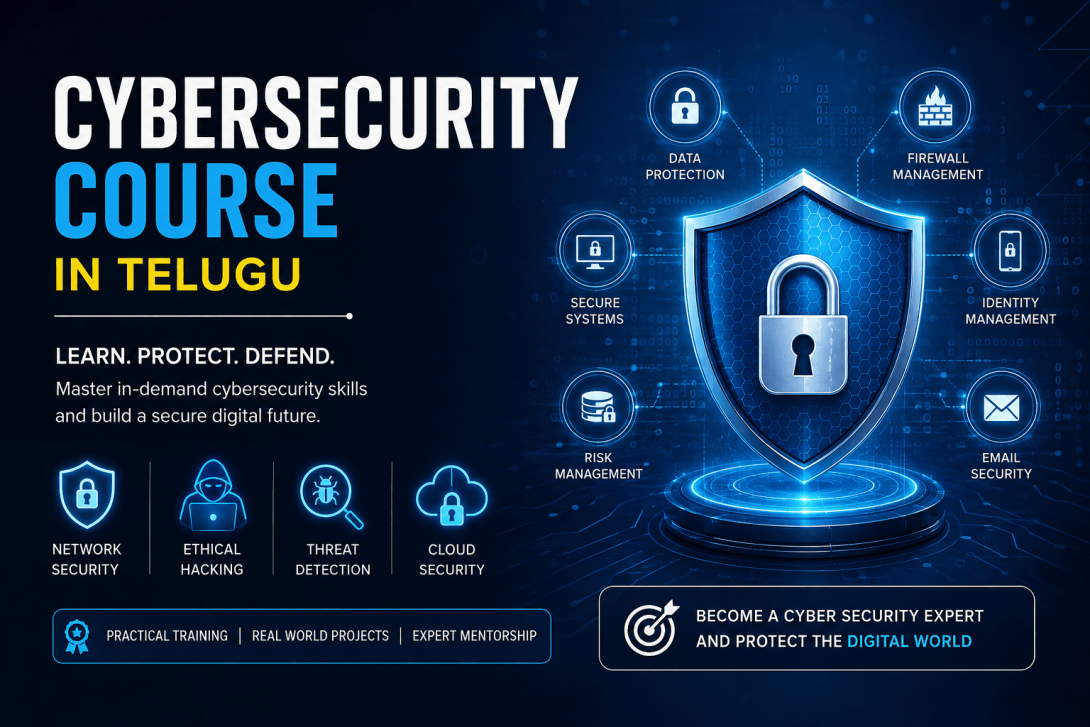
The increasing use of cloud applications, digital payments, online platforms, and connected devices has made cybersecurity an essential part of modern technology. Organizations need skilled professionals who can identify vulnerabilities, monitor systems, and protect sensitive information. For students and freshers interested in this field, developing the right skills is the first step toward building a successful career. A Cybersecurity Course in Telugu can provide beginners with a structured way to understand these concepts and develop practical knowledge.
Understanding the Cybersecurity Fundamentals
The first skill required for a cybersecurity career is a clear understanding of security fundamentals. Learners should know concepts such as confidentiality, integrity, availability, authentication, authorization, vulnerabilities, threats, and risk.
These concepts explain how organizations protect information and control access to their systems. Strong fundamentals also make it easier to understand advanced cybersecurity technologies later.
Networking Knowledge
Networking skills are extremely important for cybersecurity professionals. Security analysts frequently examine network traffic, investigate suspicious connections, and identify unusual communication patterns.
Beginners should learn about IP addresses, DNS, TCP/IP, ports, protocols, routers, switches, firewalls, and HTTP/HTTPS. Understanding how data travels across a network helps learners recognize where security weaknesses may exist.
A Cybersecurity Course in Telugu can make networking concepts easier for beginners by explaining technical ideas progressively with practical examples.
Operating System Knowledge
Cybersecurity professionals work with different operating systems, making Windows and Linux knowledge valuable. Linux is particularly useful because many servers, cloud environments, and security tools operate on Linux-based systems.
Students should learn file systems, permissions, users, processes, command-line operations, and basic system administration. Understanding how operating systems work helps professionals identify suspicious processes and unauthorized activities.
Basic Programming and Scripting
You do not necessarily need to become a software developer to enter cybersecurity, but basic programming and scripting skills can provide a significant advantage.
Languages such as Python can help automate repetitive security tasks, analyze information, process logs, and build small security utilities. Basic knowledge of JavaScript, SQL, or shell scripting can also be useful depending on the cybersecurity specialization.
Threat and Vulnerability Awareness
A cybersecurity professional should understand how common attacks happen. Learners should study malware, phishing, ransomware, credential attacks, social engineering, and denial-of-service attacks.
Understanding vulnerabilities is equally important. Security professionals need to recognize weaknesses in applications, networks, configurations, and user access controls.
The goal is not simply to memorize attack names but to understand how security teams can detect, prevent, and respond to them.
Analytical and Problem-Solving Skills
Cybersecurity involves investigating unusual events and finding the reasons behind them. Therefore, analytical thinking and problem-solving are essential skills.
A security analyst may need to examine logs, compare events, identify patterns, and determine whether an alert represents a genuine threat. Developing logical thinking through practical exercises can improve this ability.
Communication and Documentation
Technical expertise alone is not enough. Cybersecurity professionals must explain security issues clearly to colleagues, managers, and other teams.
Good communication and documentation skills help professionals write incident reports, document vulnerabilities, explain risks, and communicate recommended solutions.
Hands-On Practice
Practical experience is one of the most important parts of cybersecurity learning. Students should practice using authorized labs and controlled environments to understand security concepts.
A good Cybersecurity Course in Telugu should combine theoretical lessons with hands-on activities involving networking, security monitoring, vulnerability assessment, and incident investigation.
Continuous Learning
Cybersecurity changes constantly as new technologies and threats emerge. Professionals need a continuous learning mindset to remain effective.
Following security research, practicing regularly, learning new tools, and understanding emerging areas such as cloud security and application security can help professionals stay relevant.
Conclusion
Starting a cybersecurity career requires more than learning security tools. Beginners should develop networking, operating system, scripting, security fundamentals, analytical thinking, communication, and practical skills. A Cybersecurity Course in Telugu can provide an accessible learning path for Telugu-speaking students while helping them gradually build industry-relevant knowledge. With regular practice and continuous learning, aspiring professionals can prepare for a variety of cybersecurity opportunities.