
The Central and Eastern Europe Automotive Aftermarket is experiencing steady growth as vehicle owners increasingly invest in replacement parts, maintenance services, repairs, and vehicle upgrades. The aftermarket plays an important role in supporting vehicle performance, road safety, and longevity. Rising vehicle ownership, an aging vehicle fleet, and growing demand for cost-effective maintenance solutions are contributing to the development of this regional market.
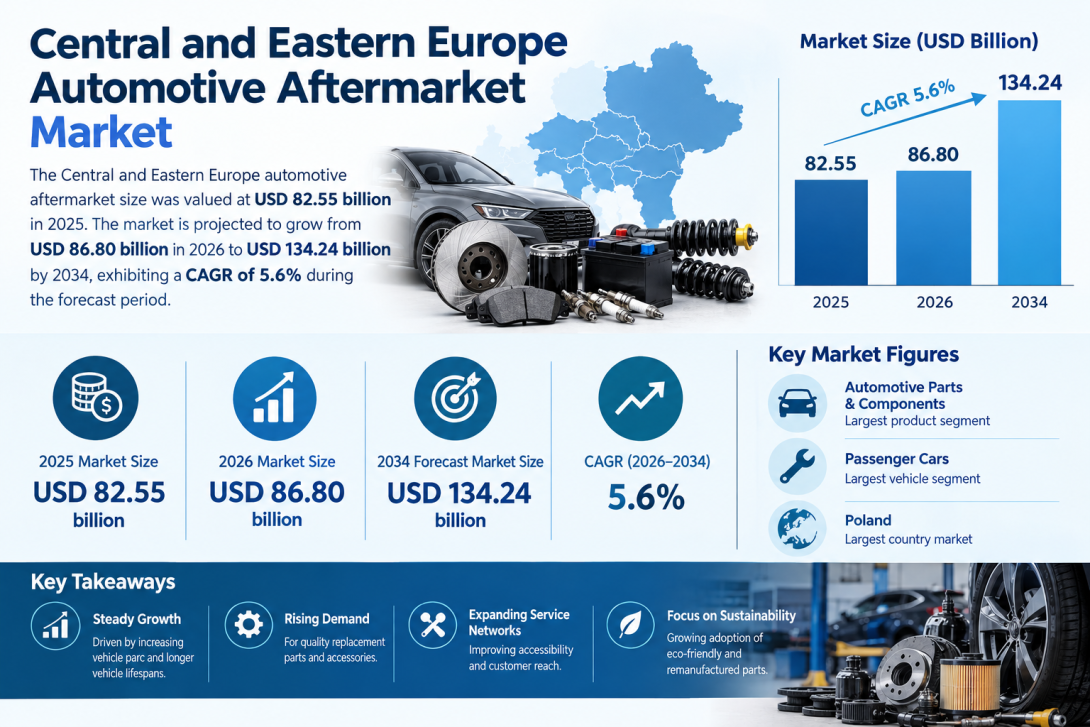
According to Fortune Business Insights, the Central and Eastern Europe automotive aftermarket size was valued at USD 82.55 billion in 2025. The market is projected to grow from USD 86.80 billion in 2026 to USD 134.24 billion by 2034, exhibiting a CAGR of 5.6% during the forecast period. Increasing demand for automotive components, expansion of repair networks, and the growing adoption of digital automotive services are expected to support market growth.
Growing Demand for Vehicle Maintenance and Replacement Parts
The increasing need to maintain vehicles in good operating condition is a major factor driving the Central and Eastern Europe Automotive Aftermarket. Regular servicing, replacement of worn components, and preventive maintenance are essential for extending vehicle life and reducing unexpected repair expenses.
Many consumers prefer repairing existing vehicles rather than purchasing new ones because of vehicle prices and household budget considerations. This trend creates opportunities for aftermarket suppliers offering replacement parts, lubricants, filters, batteries, tires, braking systems, and other essential automotive components.
As vehicle fleets continue to age, demand for routine maintenance and mechanical repairs is expected to remain an important contributor to regional market expansion.
Expansion of Independent Repair Shops and Service Networks
Independent repair shops play a significant role in the automotive aftermarket across Central and Eastern Europe. These businesses provide maintenance and repair services for different vehicle brands and often offer alternatives to authorized dealerships.
The availability of competitively priced components and flexible servicing options attracts customers seeking affordable vehicle maintenance. Distributors and parts suppliers are also strengthening their relationships with repair workshops to improve product availability and delivery efficiency.
The expansion of organized service networks and improvements in repair capabilities are expected to support the development of the regional automotive aftermarket.
For detailed market insights : https://www.fortunebusinessinsights.com/central-and-eastern-europe-automotive-aftermarket-115992
Product Type Analysis
The automotive aftermarket includes several product categories, such as replacement parts, tires, batteries, lubricants, filters, braking components, suspension systems, and electrical components.
Replacement parts represent an essential category because vehicle components experience wear and tear during regular operation. Tires, brake pads, filters, and batteries require periodic inspection and replacement to maintain vehicle reliability and safety.
Demand for electrical and electronic components is also increasing as modern vehicles incorporate more sensors, advanced driver assistance systems, and electronic control units. These developments are creating opportunities for suppliers capable of meeting increasingly complex repair requirements.
Vehicle Type Analysis
The Central and Eastern Europe Automotive Aftermarket serves passenger cars, light commercial vehicles, and heavy commercial vehicles.
Passenger cars account for a broad range of aftermarket requirements, including routine servicing, tire replacement, engine maintenance, and body repairs. Growth in passenger vehicle ownership therefore supports consistent demand for replacement components.
Commercial vehicles also generate substantial aftermarket activity because fleet operators depend on regular maintenance to reduce downtime and maintain operational efficiency. Trucks, vans, and other commercial vehicles require durable components and scheduled servicing to support transportation and logistics activities.
Distribution Channel Analysis
Distribution channels include original equipment supplier networks, authorized dealerships, independent distributors, automotive parts retailers, and online platforms.
Traditional distributors and retail outlets remain important because customers and repair professionals often require immediate access to replacement parts. These channels also provide technical assistance and product compatibility information.
Meanwhile, e-commerce is transforming automotive parts distribution. Online platforms allow customers and workshops to compare prices, check product specifications, and access a wider selection of components. Digital ordering systems and improved logistics are expected to strengthen the role of online sales in the regional aftermarket.
Regional Market Trends
The Central and Eastern European automotive aftermarket benefits from established automotive manufacturing activities, extensive vehicle fleets, and demand for affordable repair solutions. Countries such as Poland, the Czech Republic, Romania, Hungary, and Slovakia contribute to the region's automotive ecosystem through vehicle ownership, manufacturing, distribution, and repair services.
Poland offers opportunities because of its large consumer market and extensive automotive service sector. The Czech Republic and Slovakia benefit from strong automotive manufacturing industries, while Romania and Hungary provide opportunities for aftermarket suppliers as vehicle maintenance requirements evolve.
Differences in purchasing power, vehicle age, road conditions, and service infrastructure influence demand across individual countries. Suppliers that adapt their pricing, distribution, and product offerings to local market conditions may be better positioned to expand their regional presence.
Competitive Landscape
Competition in the Central and Eastern Europe Automotive Aftermarket is shaped by product quality, pricing, distribution coverage, delivery speed, brand reputation, and technical support. Participants include original equipment manufacturers, aftermarket parts producers, wholesalers, distributors, online retailers, and independent service providers.
Companies are focusing on strengthening distribution networks, expanding product portfolios, improving inventory management, and adopting digital tools to serve repair professionals and vehicle owners. Partnerships with workshops and retailers also help suppliers improve market access and customer retention.
Recent Industry Developments
Developments in the automotive aftermarket are increasingly associated with digitalization, advanced vehicle technologies, and changing customer purchasing behavior. Online parts catalogs, electronic ordering systems, and digital inventory tools are helping distributors improve efficiency and reduce delays.
At the same time, the growing presence of hybrid and electric vehicles is creating new requirements for diagnostic equipment, electrical components, battery-related services, and specialized technician training. Aftermarket businesses are adapting their capabilities to accommodate both conventional and electrified vehicles.
Get Free Sample PDF: https://www.fortunebusinessinsights.com/enquiry/request-sample-pdf/central-and-eastern-europe-automotive-aftermarket-115992
Future Outlook
The Central and Eastern Europe Automotive Aftermarket is expected to maintain steady growth through 2034, supported by rising vehicle maintenance requirements, demand for replacement parts, expanding repair networks, and digital distribution channels.
According to Fortune Business Insights, the market is projected to increase from USD 86.80 billion in 2026 to USD 134.24 billion by 2034, registering a CAGR of 5.6%. As vehicle technologies evolve, suppliers will need to balance affordability with product quality, technical expertise, and efficient distribution.
Businesses that respond effectively to changing vehicle requirements, strengthen relationships with repair networks, and adopt digital sales and inventory solutions are likely to find opportunities in this developing regional market.
Related Reports
Uncover Japan’s Market Trends - Explore the Latest - Central and Eastern Europe Automotive Aftermarket - Insights