
The Canada prostate cancer hormone therapy market is gaining importance as healthcare providers focus on improving prostate cancer management and expanding access to effective treatment options. Prostate cancer is one of the most commonly diagnosed cancers among men in Canada. Hormone therapy, also known as androgen deprivation therapy (ADT), plays an important role in managing the disease by reducing the production or activity of androgens, including testosterone, which can support cancer cell growth.
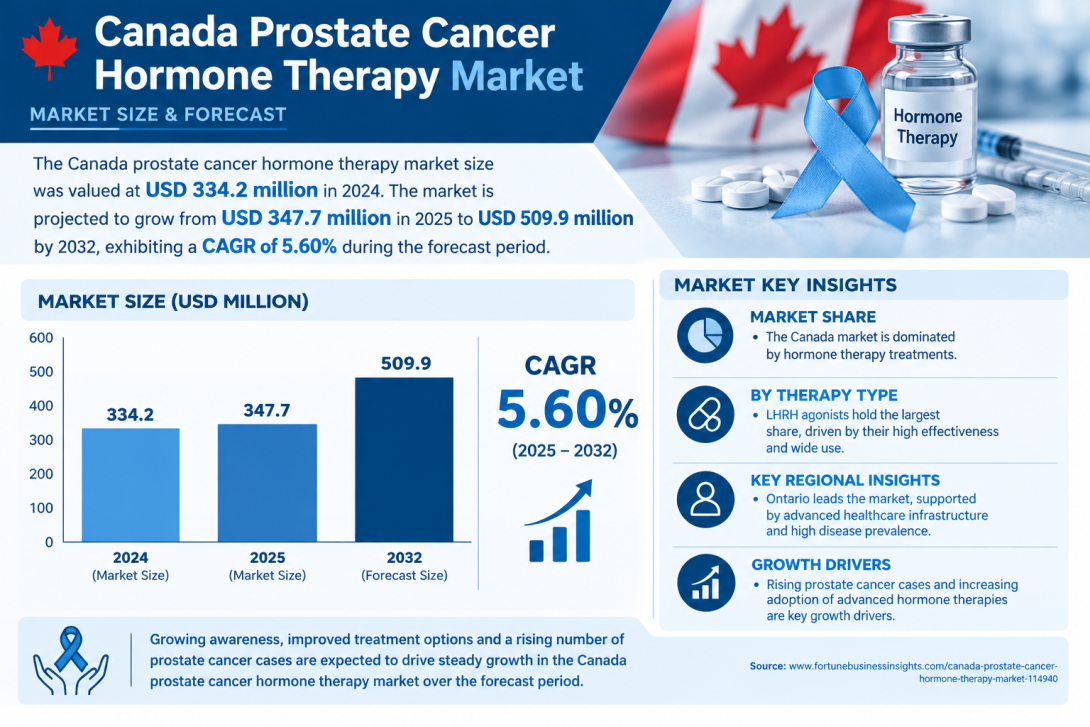
According to Fortune Business Insights, the Canada prostate cancer hormone therapy market size was valued at USD 334.2 million in 2024. The market is projected to grow from USD 347.7 million in 2025 to USD 509.9 million by 2032, exhibiting a CAGR of 5.60% during the forecast period. Increasing awareness, improvements in cancer diagnosis, and the development of advanced hormonal treatments are expected to contribute to market expansion.
Rising Prevalence of Prostate Cancer in Canada
The increasing burden of prostate cancer is an important factor supporting demand for hormone therapy in Canada. An aging population contributes to the need for cancer screening, diagnosis, and treatment, as the risk of prostate cancer generally increases with age.
Hormone therapy is used in different stages of prostate cancer, depending on disease progression and individual treatment needs. It may be prescribed alongside radiation therapy, following other treatments, or to manage advanced disease. Greater attention to early diagnosis and long-term disease management is expected to sustain demand for hormonal treatment options.
Advancements in Hormone Therapy Treatments
Developments in pharmaceutical research are expanding the range of treatments available to patients with prostate cancer. Traditional androgen deprivation therapies reduce testosterone levels, while newer androgen receptor pathway inhibitors interfere with the effects of androgens on cancer cells.
Treatment options include gonadotropin-releasing hormone (GnRH) agonists and antagonists, androgen receptor inhibitors, and other hormonal medicines. These therapies may be used individually or in combination with other treatments, depending on the patient's condition and clinical guidelines.
Ongoing research into treatment combinations and improved disease management is expected to influence the Canada prostate cancer hormone therapy market. Healthcare professionals increasingly consider disease stage, treatment response, side effects, and patient preferences when selecting a therapeutic approach.
For detailed market insights : https://www.fortunebusinessinsights.com/canada-prostate-cancer-hormone-therapy-market-114940
Drug Class Analysis
The market can be analyzed by drug class, including androgen deprivation therapies, androgen receptor inhibitors, and other hormone-based treatments.
Androgen deprivation therapy remains an important component of prostate cancer management because it reduces the hormonal stimulation that can promote cancer growth. GnRH agonists and antagonists are commonly used approaches for suppressing testosterone production.
Androgen receptor inhibitors provide another treatment option by blocking the activity of androgen receptors. Their use in appropriate clinical settings has expanded the therapeutic options available to patients, particularly those with advanced or high-risk disease.
Treatment Type Analysis
Prostate cancer hormone therapy may be administered through injections, implants, oral medications, or other formulations, depending on the specific drug.
Injectable therapies are widely used for androgen suppression and may require administration at scheduled intervals. Oral medicines, including certain androgen receptor inhibitors, provide additional treatment options for eligible patients.
The choice of treatment depends on factors such as cancer stage, medical history, expected benefits, potential adverse effects, and access to healthcare services. Treatment planning generally involves collaboration between patients and oncology specialists to determine an appropriate care strategy.
Growing Importance of Combination Therapies
Combination treatment strategies are becoming increasingly important in prostate cancer care. Hormone therapy may be used with radiation therapy or other systemic treatments to improve disease control in selected patients.
For some patients with advanced prostate cancer, combining androgen deprivation therapy with additional medicines may improve treatment outcomes compared with hormone suppression alone. The appropriate approach depends on the patient's diagnosis, disease characteristics, overall health, and current clinical recommendations.
Continued clinical research is expected to support the evaluation of new treatment combinations and help healthcare professionals refine therapeutic decisions.
Distribution Channel Analysis
Hospitals, specialty cancer centers, and retail or specialty pharmacies are important channels for delivering prostate cancer hormone therapy in Canada.
Hospitals and cancer centers play a central role in diagnosing patients, developing treatment plans, administering injectable medicines, and monitoring treatment responses. Specialty pharmacies support access to selected prescription therapies, including oral medications that require ongoing management.
Coordination among healthcare providers, pharmacies, and public or private drug coverage programs is important for maintaining treatment continuity. Access to medicines and reimbursement arrangements can influence how patients receive therapy across different provinces and territories.
Regional Market Perspective
The Canadian market is influenced by provincial healthcare systems, population distribution, access to oncology services, and the availability of specialized cancer care.
Provinces with larger populations and established cancer treatment networks represent important areas of demand. Major healthcare centers provide access to diagnostic services, specialist consultations, and advanced treatment options.
However, patients in rural and remote communities may face challenges related to travel distances and access to specialized services. Improved care coordination, telehealth consultations, and regional treatment networks may help address some of these barriers.
Competitive Landscape
The Canada prostate cancer hormone therapy market includes pharmaceutical companies involved in developing and supplying hormonal treatments and advanced prostate cancer medicines. Competition is influenced by clinical effectiveness, safety profiles, regulatory approvals, treatment convenience, and reimbursement access.
Market participants focus on research and development, clinical trials, and the evaluation of new treatment combinations. Pharmaceutical innovation and the introduction of additional therapeutic options may shape the competitive environment over the coming years.
Get Free Sample PDF: https://www.fortunebusinessinsights.com/enquiry/request-sample-pdf/canada-prostate-cancer-hormone-therapy-market-114940
Future Outlook
The Canada prostate cancer hormone therapy market is expected to maintain steady growth through 2032. According to Fortune Business Insights, the market is projected to increase from USD 347.7 million in 2025 to USD 509.9 million by 2032, registering a CAGR of 5.60%.
An aging population, continued demand for prostate cancer treatment, and advances in hormonal medicines are expected to support market development. Improvements in diagnosis, treatment planning, and access to specialized oncology services may also influence future demand.
At the same time, treatment affordability, potential adverse effects, and differences in healthcare access remain important considerations. Continued pharmaceutical research and patient-centered treatment strategies will be essential to improving care. Overall, the market is positioned for sustained development as Canada's healthcare system continues to address the evolving needs of men living with prostate cancer.
Related Reports
Curious About Japan’s Market? Explore the Latest - Canada Prostate Cancer Hormone Therapy Market - Insights