

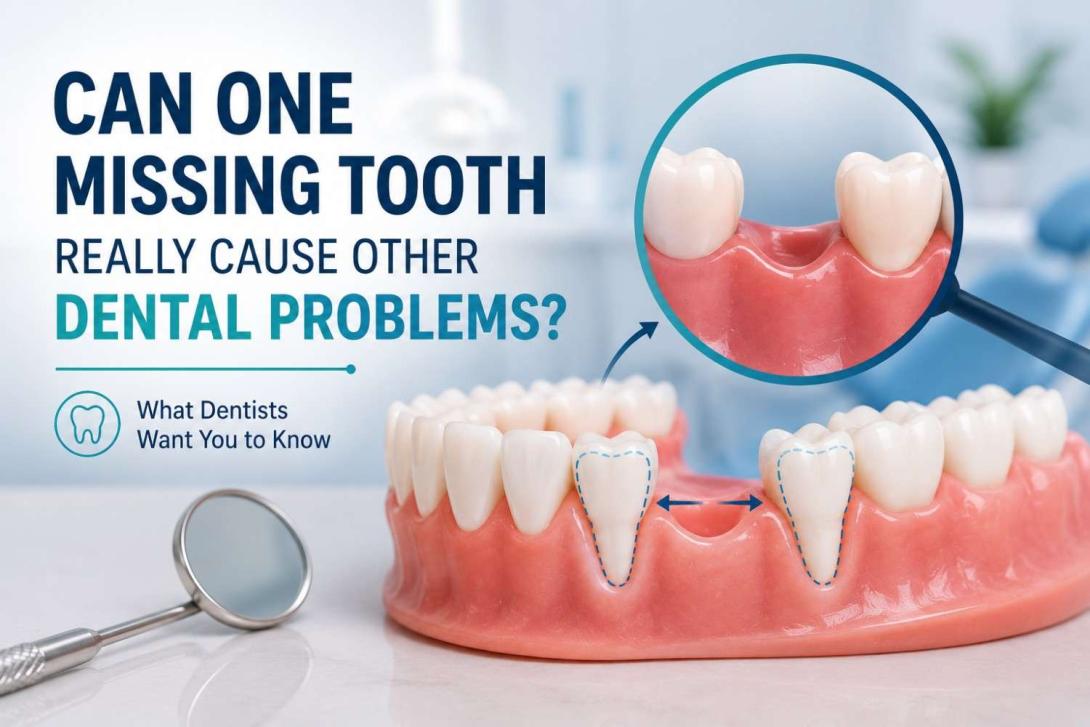
Many people assume that losing a single tooth isn't a major concern—especially if it's at the back of the mouth where it isn't visible when smiling. If chewing still feels manageable and there is little or no pain, replacing the tooth often slips down the priority list.
However, dentists frequently see patients months or years after losing a tooth who are surprised to learn that the empty space has affected much more than their smile. Even one missing tooth can gradually influence your bite, jawbone, neighbouring teeth, and long-term oral health.
Understanding why this happens can help you make informed decisions before small problems become more complex.
Every Tooth Has an Important Job
Your teeth are designed to work together as a complete system. Each tooth helps distribute biting forces evenly while supporting the surrounding teeth and jawbone.
When one tooth is lost, that balance changes. The remaining teeth must absorb additional pressure, and the empty space can trigger gradual changes throughout the mouth.
Although these changes usually don't happen overnight, they often become more noticeable over time.
Your Neighbouring Teeth May Begin to Move
One of the earliest consequences of an untreated missing tooth is tooth movement.
Teeth naturally drift toward available space. When a gap is left untreated, neighbouring teeth may slowly tilt into that area while the opposing tooth may begin to over-erupt because it no longer has a tooth to bite against.
This movement can lead to:
- Uneven tooth wear
- Food trapping
- Crowded areas that are harder to clean
- Bite changes
- Increased plaque accumulation
The longer the space remains, the more difficult it can become to restore normal alignment.
Bone Changes Can Begin Without You Realising
Natural tooth roots stimulate the jawbone every time you chew. Once a tooth is removed, that stimulation decreases significantly.
Without regular stimulation, the surrounding bone may gradually shrink—a natural biological process called bone resorption.
Bone loss doesn't usually cause pain, which is why many people don't realise it's happening until a dental examination or X-ray reveals the changes.
Maintaining healthy bone is important because it supports surrounding teeth and can influence future treatment options if you decide to replace the missing tooth later.
Small Bite Changes Can Affect Your Whole Mouth
Your bite is carefully balanced so that chewing forces are shared across all your teeth.
When one tooth is missing, extra pressure is often placed on the remaining teeth. Over time, this uneven force may contribute to:
- Jaw discomfort
- Excessive wear on certain teeth
- Increased sensitivity
- Difficulty chewing particular foods
These issues may develop gradually, making them easy to overlook in the early stages.
Missing Teeth Can Make Oral Hygiene More Challenging
As teeth shift, new spaces and tight contact points may develop.
These areas can trap food more easily and make brushing and flossing less effective, increasing the risk of:
- Tooth decay
- Gum inflammation
- Periodontal disease
- Persistent bad breath
Maintaining excellent oral hygiene becomes even more important after tooth loss, but replacing the missing tooth may also help restore a healthier environment for cleaning.
Why Early Assessment Matters
Not every missing tooth requires the same treatment. The most suitable option depends on several factors, including:
- Your gum health
- Jawbone condition
- Number of missing teeth
- Bite alignment
- Overall oral health
Seeking professional advice early gives your dentist more opportunities to recommend conservative treatment before additional complications develop.
For people looking for experienced dental care in the local area, visiting a trusted dentist near Picton can provide a personalised assessment and help determine which tooth replacement option best suits your long-term oral health goals.
Modern Tooth Replacement Options
Today's dentistry offers several reliable ways to restore missing teeth.
Depending on your individual needs, treatment may include:
- Dental implants
- Dental bridges
- Partial dentures
- Implant-supported restorations
Each option has its own advantages, and the right choice depends on your clinical situation, lifestyle, and expectations.
Learn More About the Long-Term Effects of Tooth Loss
Many of the changes caused by a missing tooth occur gradually, which is why they're often overlooked.
If you'd like a more detailed explanation of how untreated tooth loss affects your jawbone, bite, neighbouring teeth, and overall oral health, read this in-depth guide - How Missing Teeth Affect Your Oral Health and Why Early Replacement Matters
Final Thoughts
Losing a single tooth may not seem urgent, but the effects often extend beyond the visible gap. Tooth movement, bone loss, bite changes, and cleaning difficulties can all develop over time if the space is left untreated.
The good news is that modern dentistry provides several effective ways to restore missing teeth while protecting your long-term oral health. Having your mouth assessed sooner rather than later allows potential problems to be identified early and gives you more treatment options to maintain a healthy, functional smile.