

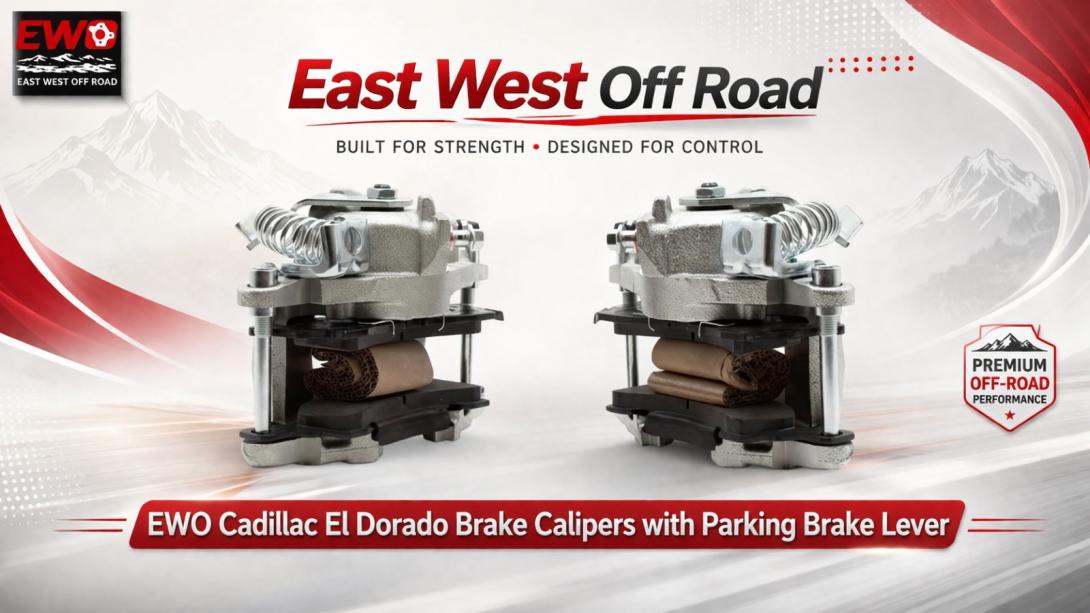
Upgrading heavy-duty truck axles to a rear disc assembly provides immense stopping power, but builders frequently run into a major hurdle: losing the emergency brake. If you want an upgrade that keeps your vehicle completely street legal, you need high-quality Cadillac El Dorado brake calipers. Sourced from heavy-duty 1970s GM design platforms, these calipers feature an integrated parking brake caliper that offers a mechanical emergency brake without sacrificing hydraulic clamping force.
Whether you are performing a 1976-1978 Cadillac Eldorado rear calipers upgrade on a dedicated trail rig or implementing a complete rear disc parking brake configuration on a classic square-body tow vehicle, this guide will walk you through the essential technical details to ensure your build is a success.
Heavy-Duty Applications: From 14-Bolt to Dana 60
The beautiful thing about the GM rear disc brake caliper platform is its sheer versatility across rugged heavy-duty truck platforms. Trail builders and commercial haulers rely on this configuration for multiple severe-duty applications:
- GM 14 Bolt Rear Disc Conversion: Instantly sheds massive weight compared to factory iron drums while providing superior heat dissipation. Builders utilize SRW 14 bolt disc brackets for single-wheel applications or specialized configurations for a DRW rear disc conversion and Cab and Chassis disc brake kit.
- Dana 60 Rear Disc Conversion & Sterling 10.25 Disc Brakes: Eliminates old-school brake fade on custom 1-ton axle disc swap builds, ensuring predictable line pressures under load.
- 3/4 Ton Truck Rear Disc Conversion: Perfect for converting older leaf-sprung rigs using 73-86 GM K20 brake calipers or 87-91 GM V20 brake calipers over to an efficient, low-maintenance off-road brake upgrade.
Technical Specifications: Built to EWO Standards
When sourcing an El Dorado parking brake caliper, choosing parts engineered for rigorous use is paramount. The EWO Cadillac El Dorado Brake Calipers (commonly referred to under part number EWO E63013) skip the frustrating core charges of traditional auto parts stores while offering upgraded trail-ready components.
Core Component Breakdown
The structural differences between consumer-grade car parts and true EWO Army brake parts come down to heavy-duty engineering tolerances:
- Massive Piston Volume: Features a massive 2 15/16 inch piston configuration designed to displace massive fluid volume for optimal pad contact.
- Mounting Dimensions: Built with standard 7 inch mounting pin spacing to work natively with the most popular aftermarket axle brackets.
- Corrosion Protection: Ships as clear zinc coated brake calipers. This heavy zinc plated brake calipers coating prevents rust seizing when exposed to deep mud, road salt, or river crossings.
- Thread Pitch Specifications: Requires heavy-duty 7/16-20 banjo bolts with copper washers rather than smaller metric fasteners, allowing maximum fluid entry without line restriction.
Step-by-Step Mechanical Calibration
Because these units feature a complex, internal hydro-mechanical rear caliper configuration, proper mechanical setup is critical. Skipping these layout parameters will cause a low pedal feel or an emergency brake that fails to lock on inclines.
1.Verify Brake Pad Compatibility:Aligning the internal anti-rotation piston mechanism.
Ensure you are using correct D122 brake pads. In the D122 vs D52 pads comparison, D122 variants are engineered as specialized brake pads with locking nub setups. This nub must sit securely within the face of the caliper piston to stop the caliper piston rotating when the e-brake lever pulls.
2.Pre-Adjust the Mechanical Lever:Engaging the internal mechanical ratchet.
Before introducing any hydraulic fluid, manually actuate the heavy duty parking brake lever back and forth. This mechanical cycle utilizes the internal ratchet mechanism adjustment to step the piston outward until the pad sits tight against the brake rotor face.
3.Bleed the Hydraulic System:Using the GM dual-bleeder caliper design.
Perform the standard bleeding rear disc brakes process. Ensure the active bleeder screw is at the absolute highest point of the casting. Using premium steel braided brake lines or a matched 26” Steel Braided Front Brake Line Kit – Pair (with Hardware) prevents line expansion, curing the common spongy pedal after disc swap symptom.
4.Tune System Line Pressure:Proportioning valve and master cylinder upgrades.
If the pedal still feels soft, install a high-displacement master cylinder upgrade for 4 wheel disc applications along with an adjustable proportioning valve. Always complete a residual pressure valve removal on older drum-style master cylinders to prevent the rear pads from dragging continuously.
Upgrade to Military Grade Reliability
Do not settle for generic remanufactured parts when building your custom axle assembly. The Cadillac El Dorado Brake Calipers with Parking Brake Lever from East West Off Road brake calipers deliver a premium, loaded rear brake calipers package complete with a high-tension return spring, heavy-duty hardware, and a no core charge El Dorado calipers structure. Get the performance your truck deserves.
Frequently Asked Questions (FAQs)
Can I use standard D52 pads in these calipers?
No. While they visually resemble each other, you must use D122 brake pads because they feature the specialized locking nub on the backing plate. Without this nub engaging the caliper's anti-rotation slot, the automatic adjustment mechanism will fail, causing your emergency brake to lose holding tension over time.
Why does my brake pedal feel soft after finishing my 14-bolt disc conversion?
A soft or spongy pedal usually indicates either trapped air or insufficient fluid volume from your stock master cylinder. Because large piston Eldorado calipers require substantial fluid movement, upgrading to a 1-ton or four-wheel-disc specific master cylinder is highly recommended to achieve a firm, responsive pedal feel.
Do these calipers require a core return when purchasing from East West Off Road?
No. All premium EWO Eldorado calipers are sold brand new with absolutely no core charge, eliminating the logistical headache and added cost of hunting down and shipping back old, worn-out core castings.