
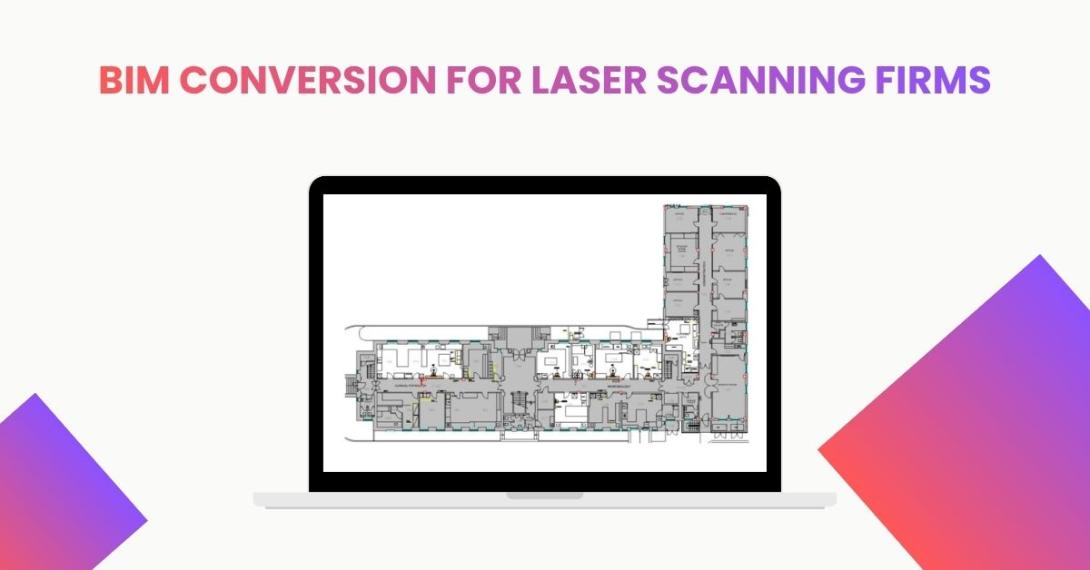
Laser scanning technology has transformed the architecture, engineering, and construction industry by delivering highly accurate point cloud data for buildings and infrastructure projects. However, raw scan data alone is not enough for effective project execution. This is where BIM conversion for laser scanning firms becomes essential. By converting laser scan data into intelligent BIM models, firms can improve project accuracy, reduce rework, and support efficient collaboration across project teams.
What is BIM Conversion?
BIM conversion is the process of transforming point cloud data, CAD drawings, or scanned documents into detailed Building Information Modeling (BIM) files. Laser scanning firms often capture massive amounts of spatial data using LiDAR or 3D laser scanners. This data is then converted into 3D BIM models using software such as Autodesk Revit, Navisworks, and AutoCAD.
The resulting BIM model contains valuable information about building geometry, dimensions, structural components, and MEP systems. These models are widely used for renovation, retrofitting, facility management, and clash detection.
Why Laser Scanning Firms Need BIM Conversion
Laser scanning companies generate accurate point cloud data, but clients often require structured BIM deliverables for project planning and construction management. BIM conversion helps bridge the gap between raw scan data and actionable digital models.
Improved Accuracy
Point cloud to BIM conversion ensures precise representation of existing conditions. This accuracy is especially important for renovation and heritage projects where exact measurements are critical.
Faster Project Delivery
BIM conversion streamlines workflows by reducing manual drafting time. Engineers and architects can directly use BIM models for design coordination, reducing delays and improving efficiency.
Better Collaboration
BIM models allow architects, contractors, and facility managers to collaborate on a shared digital platform. Teams can access updated project information in real time, improving communication and reducing conflicts.
Enhanced Clash Detection
Converting laser scans into BIM models enables clash detection between structural, architectural, and MEP systems. Identifying conflicts early minimizes costly construction errors.
Efficient Facility Management
Facility owners can use BIM models for maintenance planning, asset management, and future renovations. Accurate digital twins simplify long-term building operations.
Key Applications of BIM Conversion for Laser Scanning Firms
BIM conversion services are widely used across multiple industries and project types.
Renovation and Retrofit Projects
Laser scanning firms often support renovation projects by capturing existing site conditions. BIM models provide accurate documentation for redesign and structural modifications.
Industrial Facilities
Factories, manufacturing plants, and processing facilities require detailed BIM models for equipment placement, piping systems, and maintenance planning.
Heritage Preservation
Historic buildings benefit from scan to BIM workflows because they preserve intricate architectural details in a digital format.
Infrastructure Projects
Bridges, tunnels, airports, and railway stations rely on BIM conversion for accurate planning, inspection, and maintenance activities.
Benefits of Outsourcing BIM Conversion
Many laser scanning firms choose to outsource BIM conversion services to specialized BIM companies. Outsourcing offers several advantages:
- Reduced operational costs
- Access to skilled BIM experts
- Faster turnaround times
- Scalability for large projects
- High-quality BIM deliverables
By partnering with experienced BIM service providers, laser scanning firms can focus on data capture while ensuring professional BIM modeling support.
Choosing the Right BIM Conversion Partner
When selecting a BIM conversion company, laser scanning firms should consider several factors:
- Experience in point cloud to BIM projects
- Expertise in Autodesk Revit and BIM software
- Ability to meet LOD requirements
- Quality assurance processes
- Timely project delivery
A reliable BIM partner helps maintain data accuracy and ensures smooth project execution.
Future of BIM Conversion in Laser Scanning
The demand for BIM conversion services continues to grow as the construction industry adopts digital transformation. Technologies like AI, cloud collaboration, and digital twins are making BIM workflows more advanced and efficient.
Laser scanning firms that integrate BIM conversion into their services can gain a competitive advantage in the global AEC market. Accurate BIM deliverables improve project coordination, increase client satisfaction, and support sustainable construction practices.
Conclusion
BIM conversion for laser scanning firms plays a crucial role in transforming point cloud data into intelligent and actionable BIM models. From renovation projects to facility management, BIM conversion enhances accuracy, collaboration, and operational efficiency. As the demand for digital construction solutions rises, laser scanning firms can expand their capabilities and improve project outcomes by investing in high-quality BIM conversion services.