
The global Allergy Treatment Market is experiencing significant growth as allergic conditions become an increasing concern for healthcare providers and patients. Allergies can develop in response to various triggers, including pollen, dust, food, insect stings, medications, and pet dander. Treatment options such as antihistamines, corticosteroids, nasal sprays, and immunotherapy help manage symptoms and improve patients' quality of life.
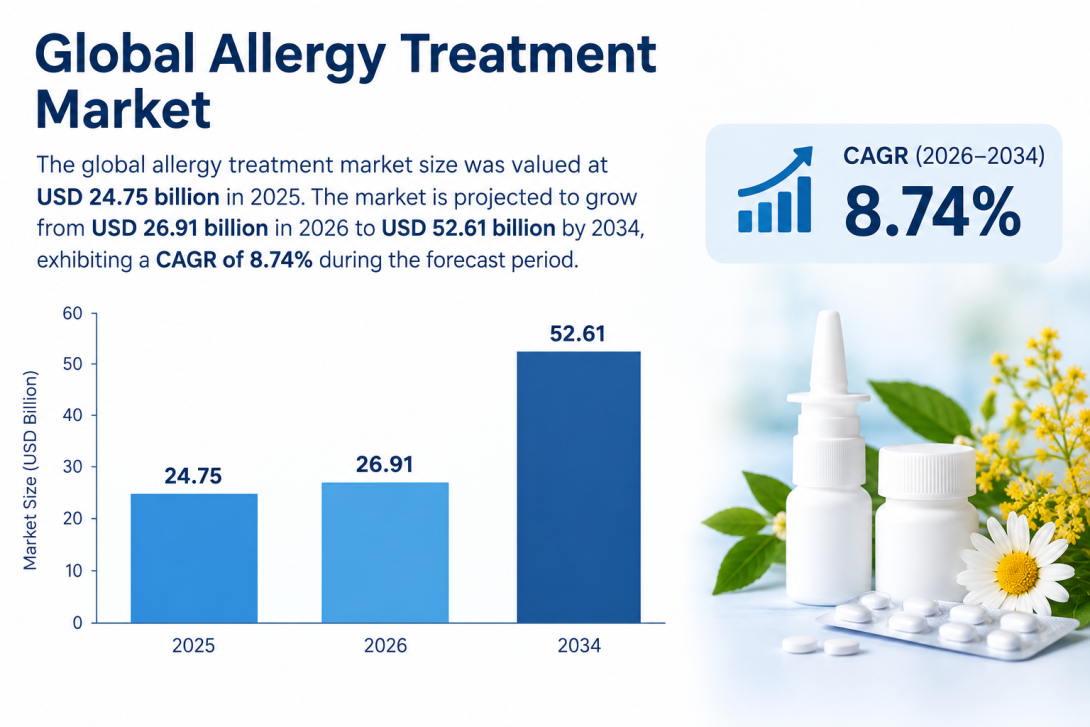
According to Fortune Business Insights, the global Allergy Treatment Market was valued at USD 24.75 billion in 2025. The market is projected to grow from USD 26.91 billion in 2026 to USD 52.61 billion by 2034, exhibiting a compound annual growth rate CAGR of 8.74% during the forecast period. Rising allergy prevalence, growing awareness of treatment options, and advancements in allergy therapies are expected to contribute to market expansion.
Growing Prevalence of Allergic Conditions
The increasing prevalence of allergic conditions is a major factor supporting the growth of the Allergy Treatment Market. Environmental pollution, changing lifestyles, exposure to allergens, and urbanization are contributing to demand for effective allergy management in many regions.
Conditions such as allergic rhinitis, skin allergies, food allergies, and insect allergies can affect people across different age groups. Patients often require medications to control symptoms and maintain their daily routines. This creates sustained demand for prescription treatments and over-the-counter products.
Healthcare professionals are also emphasizing accurate diagnosis and appropriate treatment selection. Greater awareness of allergy symptoms encourages patients to seek medical advice and explore available treatment options.
Advancements in Allergy Medications and Immunotherapy
Developments in pharmaceutical research are creating new opportunities in the Allergy Treatment Market. Traditional medications, including antihistamines and corticosteroids, remain important for controlling symptoms such as sneezing, itching, inflammation, and nasal congestion.
Immunotherapy is another important treatment approach. It involves carefully controlled exposure to specific allergens to modify the immune system's response over time. Depending on the treatment and condition, immunotherapy may be administered through injections or sublingual formulations.
Research into targeted therapies and improved drug delivery methods is expanding the range of available treatment options. These developments may support more personalized approaches to allergy management and strengthen long-term market growth.
For detailed market insights : https://www.fortunebusinessinsights.com/allergy-treatment-market-105841
Allergy Type Analysis
The Allergy Treatment Market covers several allergy categories, including drug allergies, food allergies, insect allergies, skin allergies, dust allergies, pet allergies, pollen allergies, latex allergies, and other allergies associated with environmental triggers.
Food allergies create demand for treatments that help manage allergic reactions and reduce the risk of severe complications. Emergency medications, including epinephrine, are important for managing anaphylaxis when prescribed and used according to medical guidance.
Pollen and dust allergies contribute to demand for antihistamines, nasal sprays, and other medications used to control respiratory symptoms. Seasonal changes and environmental exposure can influence treatment requirements.
Skin and insect allergies also contribute to market demand. Treatments may include antihistamines, topical corticosteroids, and other therapies selected according to the condition's severity.
Treatment Type Analysis
Based on treatment type, the market is broadly divided into medications and immunotherapy.
Medications include antihistamines, corticosteroids, mast cell stabilizers, autoinjectable epinephrine, decongestants, and leukotriene inhibitors. These products address different symptoms and allergic conditions, making them important components of routine allergy management.
Immunotherapy focuses on changing the immune system's response to specific allergens. It may provide longer-term benefits for selected patients, depending on the allergy, treatment regimen, and individual response.
The demand for both categories is expected to increase as diagnosis improves and treatment options become more widely available.
Route of Administration Analysis
Oral medications are widely used because tablets and liquids can be convenient for managing many allergy symptoms. Their availability through prescription and over-the-counter channels supports accessibility.
Parenteral treatments, including injections, are important for selected therapies, particularly allergen immunotherapy and emergency treatment. Nasal formulations are commonly used for allergic rhinitis and related symptoms.
Other administration routes serve specific treatment requirements. Pharmaceutical companies continue to evaluate formulations that improve convenience, adherence, and treatment effectiveness.
Regional Analysis
North America represents an important market for allergy treatments because of its established healthcare infrastructure, availability of medications, and adoption of advanced therapies. Research and development activities also contribute to regional market development.
Europe benefits from established healthcare systems, pharmaceutical innovation, and increasing attention to allergy diagnosis and management. The adoption of immunotherapy and alternative drug delivery methods may support further growth.
Asia Pacific offers substantial growth opportunities as healthcare infrastructure improves and awareness of allergic conditions increases. Expanding access to pharmacies, medical services, and modern treatments may contribute to demand.
Latin America may experience growth through improved healthcare access and increasing awareness of allergy management. The availability and affordability of medicines will remain important factors.
The Middle East & Africa may see gradual market expansion as healthcare services develop and access to allergy treatments improves.
Competitive Landscape
The Allergy Treatment Market includes pharmaceutical companies that develop and distribute medications, immunotherapy products, and specialized allergy treatments. Competition is influenced by product effectiveness, safety profiles, regulatory approvals, research investment, and distribution capabilities.
Key companies operating in the market include:
- GlaxoSmithKline plc.
- Stallergenes Greer
- Sanofi
- Johnson & Johnson Services, Inc.
- Circassia
- F. Hoffmann-La Roche Ltd
- AbbVie Inc.
- ALK
- Allergy Therapeutics
Companies are focusing on research and development, product innovation, and expanding treatment portfolios to address different allergic conditions. Advances in immunotherapy and targeted treatments are expected to remain important areas of competition.
Recent Industry Developments
The allergy treatment industry continues to evolve through research into allergen-specific immunotherapy, new formulations, and targeted treatment approaches. Pharmaceutical companies are investigating ways to improve treatment convenience and address the needs of patients with different allergy types.
Developments in sublingual therapies and specialized medications are also influencing the market. In addition, improved awareness of severe allergic reactions is increasing attention to emergency treatment preparedness and appropriate medication access.
These developments reflect the industry's broader focus on expanding treatment options and improving the management of allergic conditions.
Get Free Sample PDF: https://www.fortunebusinessinsights.com/enquiry/request-sample-pdf/allergy-treatment-market-105841
Future Outlook
The global Allergy Treatment Market is expected to maintain strong growth through 2034. According to Fortune Business Insights, the market is projected to reach USD 52.61 billion by 2034, increasing from USD 26.91 billion in 2026 at a CAGR of 8.74%.
Future growth will depend on the rising prevalence of allergic conditions, advances in pharmaceutical research, and improved access to healthcare services. Immunotherapy, targeted treatments, and convenient drug delivery systems may create additional opportunities for market participants.
As awareness of allergy management increases, pharmaceutical companies will continue to explore treatments that address diverse patient needs. Innovation, affordability, and appropriate access to effective therapies are likely to remain central to the development of the Allergy Treatment Market.
Related Report
What’s Driving Japan’s Market? Discover the Latest - Allergy Treatment Market - Insights